Google recently completed rolling out its June 2026 Spam Update, another step in the company’s ongoing effort to improve search quality and reduce spam across its search results. While Google describes these updates as routine, they often lead to noticeable changes in website rankings—especially for sites relying on outdated or manipulative SEO tactics.
If you own a small business, there’s no reason to panic. In fact, if you’ve been focused on creating helpful content, maintaining your website, and serving your customers well, this update is more likely to benefit you than hurt you.
Let’s take a closer look at what this update means and what you should do next.
What Is Google’s June 2026 Spam Update?
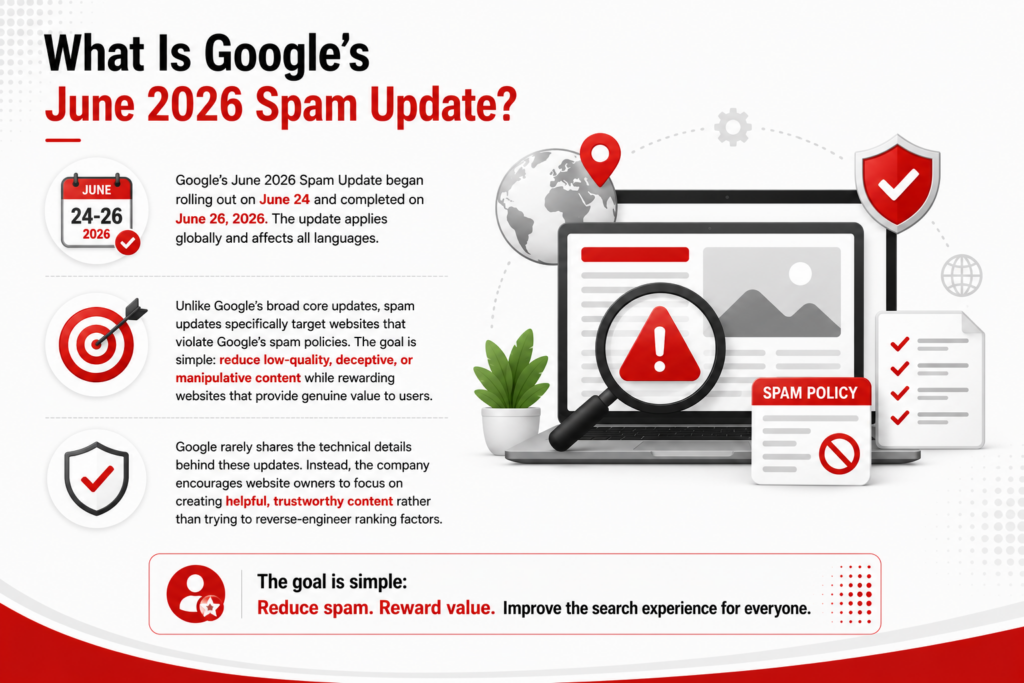
Google’s June 2026 Spam Update began rolling out on June 24 and completed on June 26, 2026. The update applies globally and affects all languages.
Unlike Google’s broad core updates, spam updates specifically target websites that violate Google’s spam policies. The goal is simple: reduce low-quality, deceptive, or manipulative content while rewarding websites that provide genuine value to users.
Google rarely shares the technical details behind these updates. Instead, the company encourages website owners to focus on creating helpful, trustworthy content rather than trying to reverse-engineer ranking factors.
What Types of Spam Is Google Looking For?
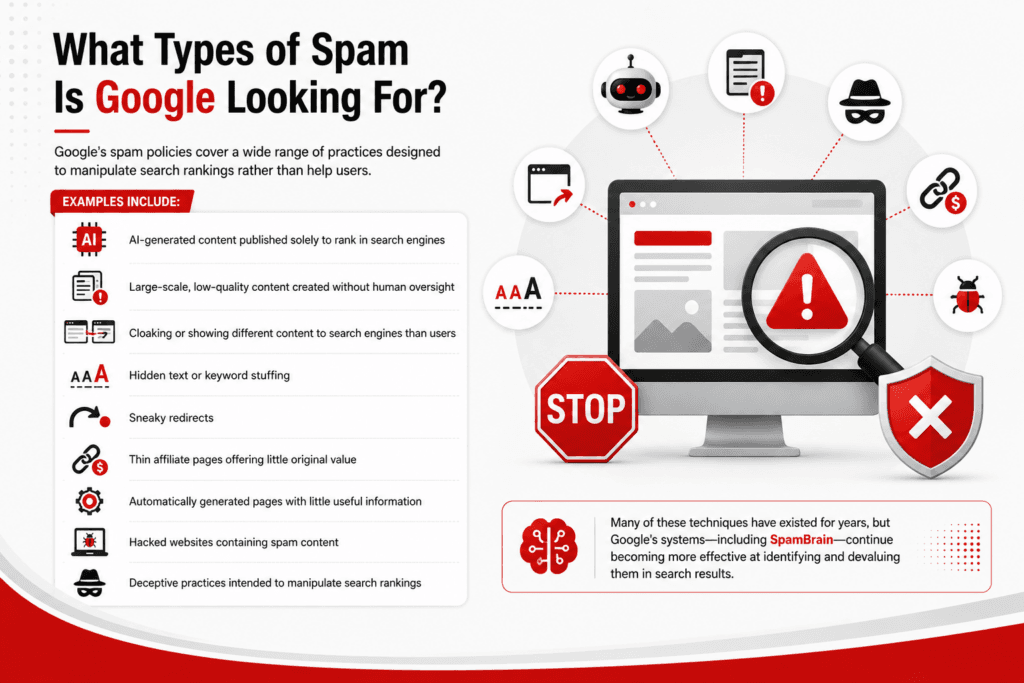
Google’s spam policies cover a wide range of practices designed to manipulate search rankings rather than help users.
Google’s official spam policies include practices such as cloaking, hidden text, automatically generated content, hacked content, and deceptive techniques designed to manipulate search rankings.
Examples include:
- AI-generated content published solely to rank in search engines
- Large-scale, low-quality content created without human oversight
- Cloaking or showing different content to search engines than users
- Hidden text or keyword stuffing
- Sneaky redirects
- Thin affiliate pages offering little original value
- Automatically generated pages with little useful information
- Hacked websites containing spam content
- Deceptive practices intended to manipulate search rankings
Many of these techniques have existed for years, but Google’s systems—including SpamBrain—continue becoming more effective at identifying them.
Is AI Content the Problem?
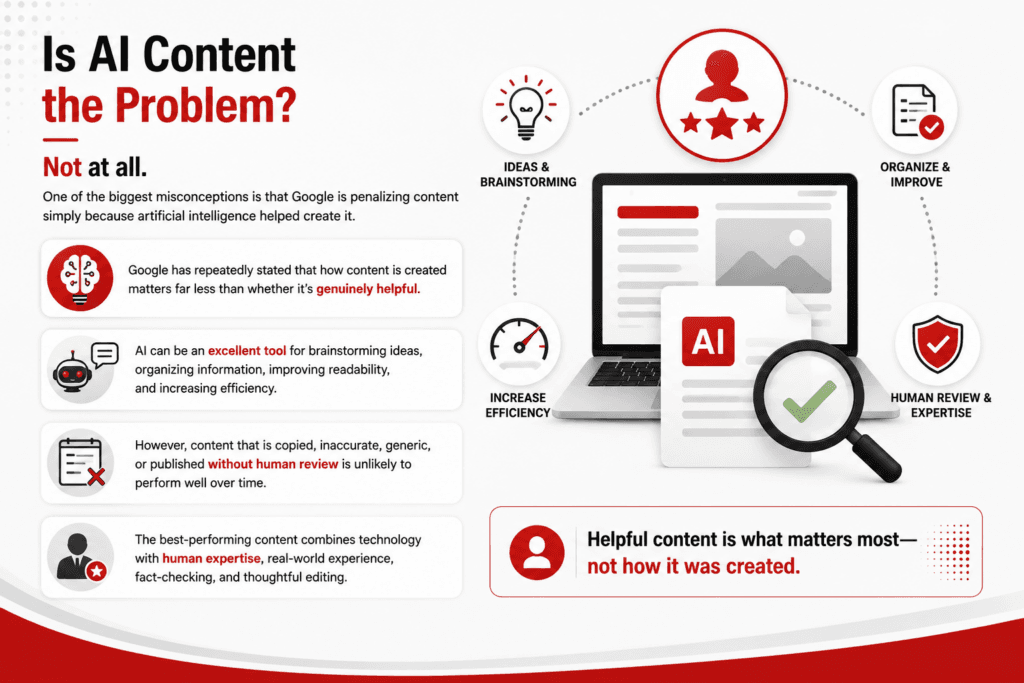
Not at all.
One of the biggest misconceptions is that Google is penalizing content simply because artificial intelligence helped create it.
Google has repeatedly stated that how content is created matters far less than whether it’s genuinely helpful.
AI can be an excellent tool for brainstorming ideas, organizing information, improving readability, and increasing efficiency. However, content that is copied, inaccurate, generic, or published without human review is unlikely to perform well over time.
The best-performing content combines technology with human expertise, real-world experience, fact-checking, and thoughtful editing.
At TK Internet Marketing, we use AI as an assistant—not a replacement for expertise. Every article is researched, reviewed, edited, and tailored to provide practical value for small business owners.
Why This Matters for Small Businesses
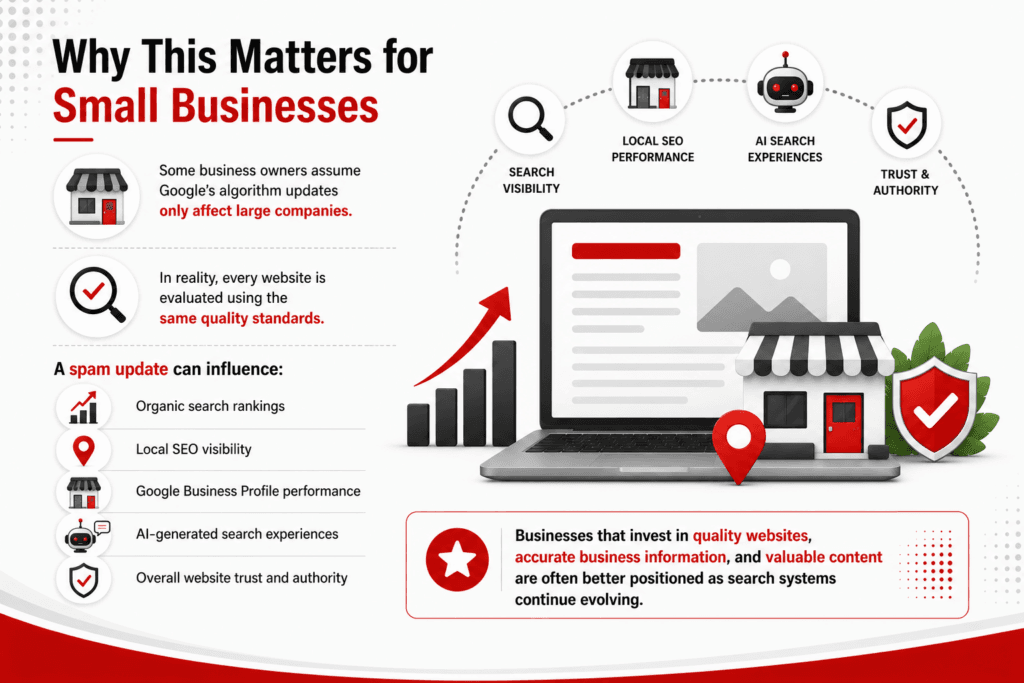
Some business owners assume Google’s algorithm updates only affect large companies.
In reality, every website is evaluated using the same quality standards.
A spam update can influence:
- Organic search rankings
- Local SEO visibility
- Google Business Profile performance
- AI-generated search experiences
- Overall website trust and authority
Businesses that invest in quality websites, accurate business information, and valuable content are often better positioned as Google’s search systems continue evolving.
For local businesses, maintaining accurate business information across the web has become increasingly important as AI-powered search continues to rely on trusted data sources.
How to Protect Your Website
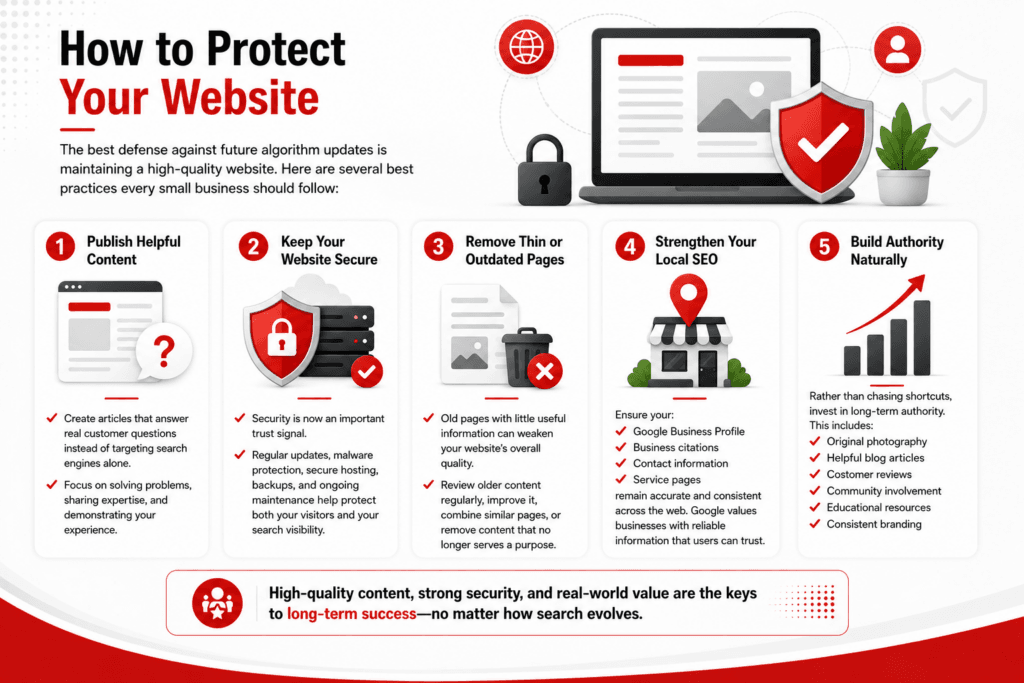
The best defense against future algorithm updates is maintaining a high-quality website.
Here are several best practices every small business should follow:
Publish Helpful Content
Create articles that answer real customer questions instead of targeting search engines alone.
Focus on solving problems, sharing expertise, and demonstrating your experience.
Keep Your Website Secure
Security is now an important trust signal.
Regular updates, malware protection, secure hosting, backups, and ongoing maintenance help protect both your visitors and your search visibility.
Remove Thin or Outdated Pages
Old pages with little useful information can weaken your website’s overall quality.
Review older content regularly, improve it, combine similar pages, or remove content that no longer serves a purpose.
Strengthen Your Local SEO
Ensure your:
- Google Business Profile
- Business citations
- Contact information
- Service pages
remain accurate and consistent across the web.
Google values businesses with reliable information that users can trust.
Build Authority Naturally
Rather than chasing shortcuts, invest in long-term authority.
This includes:
- Original photography
- Helpful blog articles
- Customer reviews
- Community involvement
- Educational resources
- Consistent branding
These signals help establish trust with both Google and potential customers.
What Should You Do If Your Rankings Changed?
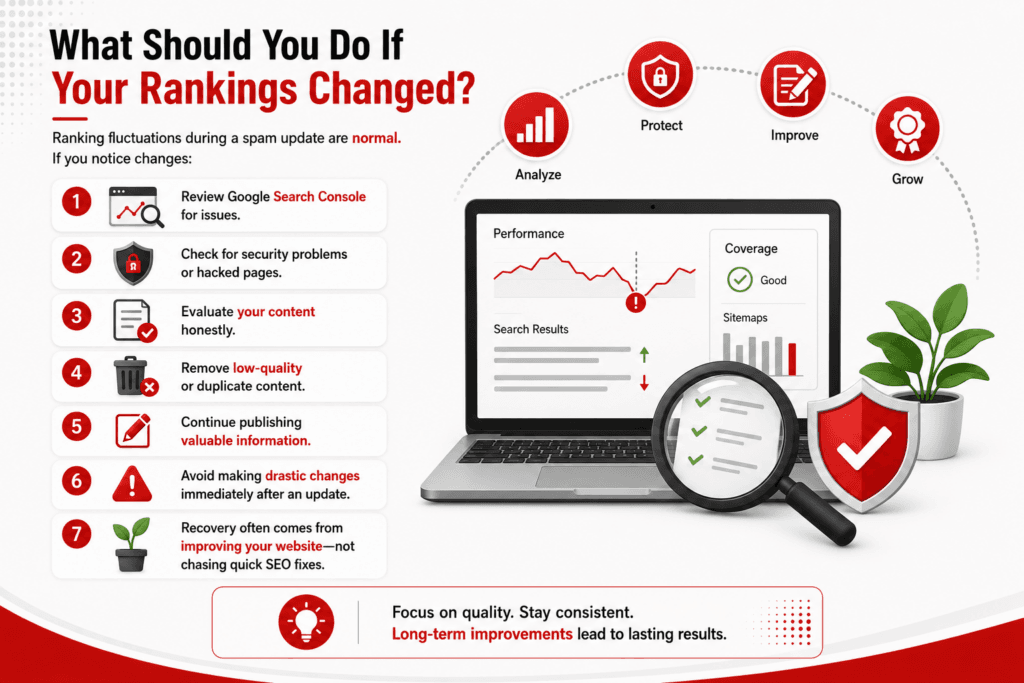
Ranking fluctuations during a spam update are normal.
If you notice changes:
- Review Google Search Console for issues.
- Check for security problems or hacked pages.
- Evaluate your content honestly.
- Remove low-quality or duplicate content.
- Continue publishing valuable information.
- Avoid making drastic changes immediately after an update.
Google recommends waiting until an update has fully rolled out before evaluating performance in Search Console and comparing meaningful time periods.
Recovery often comes from improving your website—not chasing quick SEO fixes.
Google’s Bigger Direction Is Becoming Clear
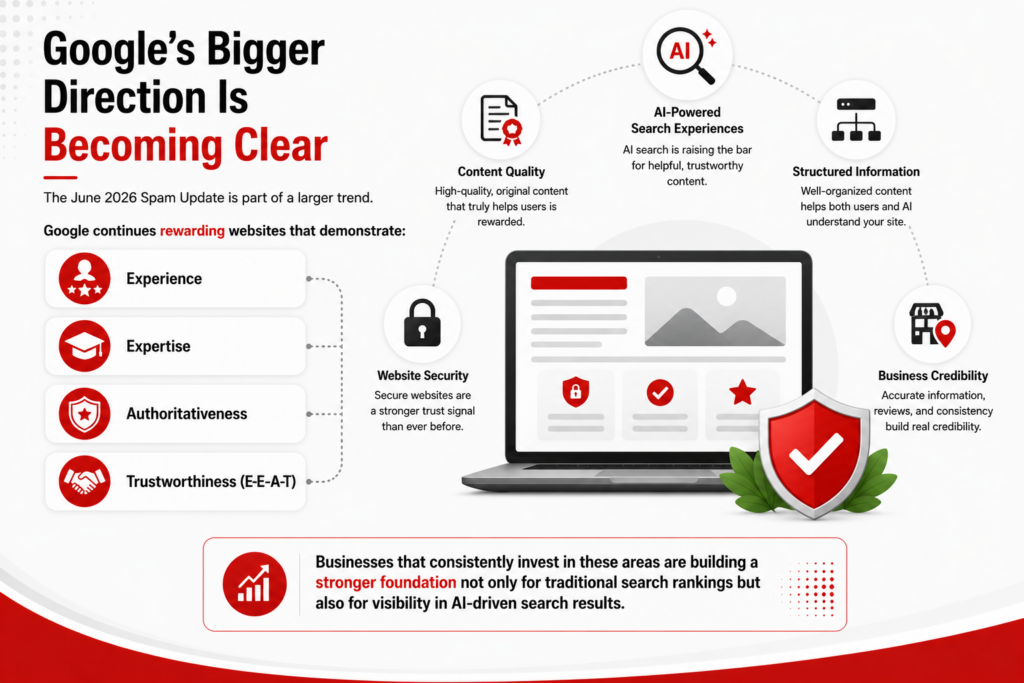
The June 2026 Spam Update is part of a larger trend.
Google continues rewarding websites that demonstrate:
- Experience
- Expertise
- Authoritativeness
- Trustworthiness (E-E-A-T)
At the same time, AI-powered search experiences are placing even greater importance on content quality, structured information, website security, and business credibility.
Businesses that consistently invest in these areas are building a stronger foundation not only for traditional search rankings but also for visibility in AI-driven search results.
What We Saw During Google’s June 2026 Spam Update
At TK Internet Marketing, we manage and maintain WordPress websites for small businesses across a variety of industries. While every Google update affects websites differently, our observations during the June 2026 Spam Update were encouraging.
The client websites we actively maintain—with regularly updated WordPress software, strong website security, quality content, and ongoing SEO best practices—remained stable throughout the rollout. We did not see widespread ranking losses among sites that consistently focus on providing helpful, trustworthy information and a positive user experience.
Updates like this reinforce something we’ve been telling clients for years: there are no lasting shortcuts to SEO success. Trying to manipulate rankings with thin content, keyword stuffing, or mass-produced AI content may provide temporary gains, but those tactics become increasingly risky as Google’s algorithms continue to evolve.
Instead, we continue to focus on strategies that stand the test of time:
- Publishing original, helpful content that answers customer questions.
- Keeping WordPress, plugins, and themes updated and secure.
- Maintaining accurate local business information.
- Improving website performance and user experience.
- Building authority through trust, consistency, and expertise.
No website is guaranteed to be unaffected by every algorithm update, but businesses that invest in long-term quality rather than quick wins are generally in a much stronger position when Google rolls out changes like the June 2026 Spam Update.
Final Thoughts
Google’s spam updates aren’t designed to punish honest businesses—they’re designed to improve the quality of search results for everyone.
If your website focuses on helping customers, provides original and trustworthy information, stays secure, and follows SEO best practices, you’re already aligned with the direction Google continues to move.
Rather than chasing every algorithm change, focus on building a website that earns trust. That’s the strategy that continues to stand the test of time.
Related Resources
Continue learning about modern SEO and AI search:
- How Google’s AI Search Changes Local SEO
- Website Security Is Also an SEO Issue
- Managed WordPress Hosting vs. Regular Hosting
- Are Data Aggregators Still Important?
Need Help Keeping Your Website Google-Ready?
Whether you need ongoing WordPress maintenance, stronger local SEO, website security, or a long-term content strategy, TK Internet Marketing can help your business stay visible in an ever-changing search landscape.
Contact us today to learn how we can help your website perform better in both Google Search and AI-powered search experiences.
