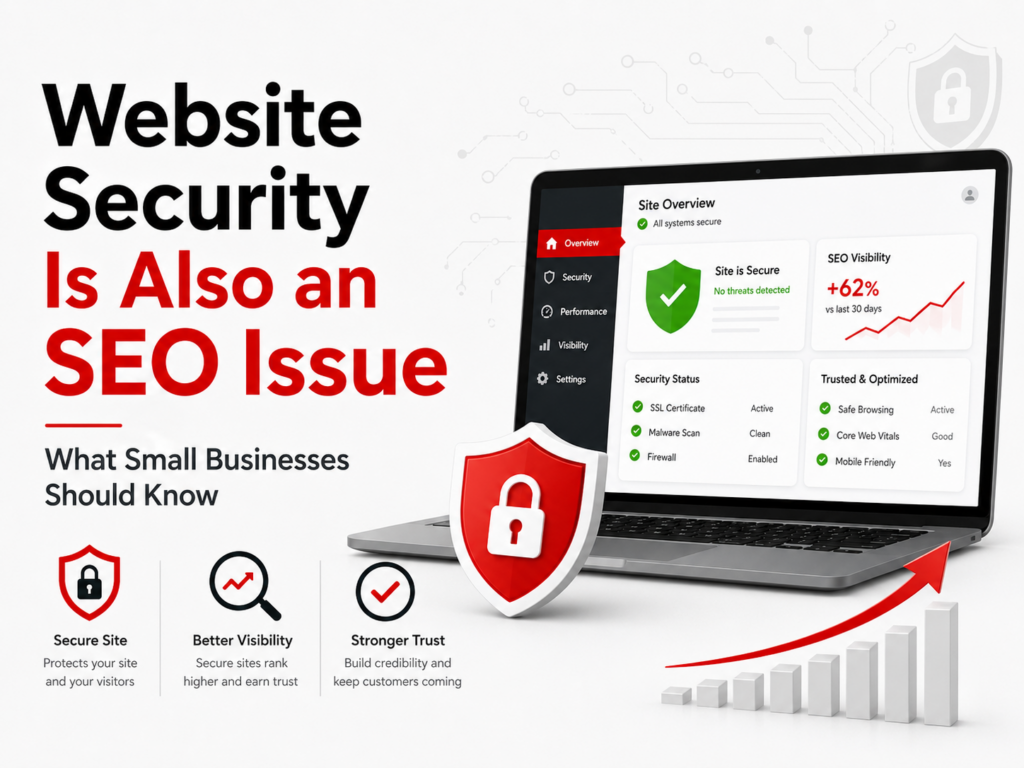
Website security is often treated as a technical issue, but it is also a marketing issue.
For small businesses, your website supports your credibility, local visibility, customer trust, lead generation, and search engine performance. If your website is hacked, broken, slow, unsafe, or filled with spam, it can affect more than your technology. It can affect how customers and search engines view your business.
That is why website security and SEO should not be treated as separate conversations.
A secure, well-maintained website helps create a stronger foundation for visibility, trust, and long-term growth.
Why Website Security Matters for SEO
Search engine optimization is not just about keywords and content. It also depends on whether your website provides a good experience for visitors.
If a website is unsafe, unreliable, slow, infected, or difficult to use, visitors may leave quickly. Search engines may also detect security issues, spam content, malware, or hacked pages.
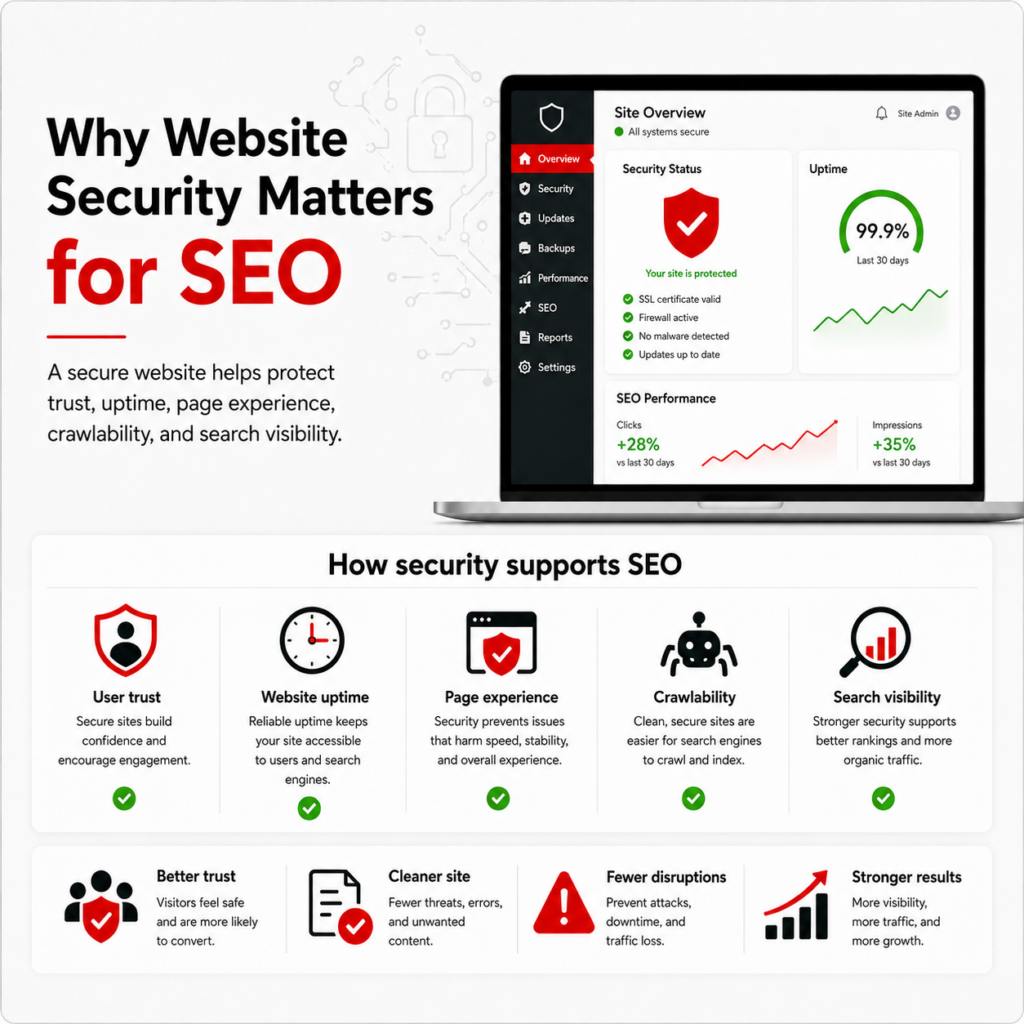
Website security can influence SEO by affecting:
- User trust
- Website uptime
- Page experience
- Crawlability
- Site reputation
- Content quality
- Search visibility
- Conversion rates
A business may have strong content and good services, but if the website is compromised or unstable, those strengths can be overshadowed.
A Hacked Website Can Damage Trust Quickly
When customers visit your website, they expect it to be safe and professional.
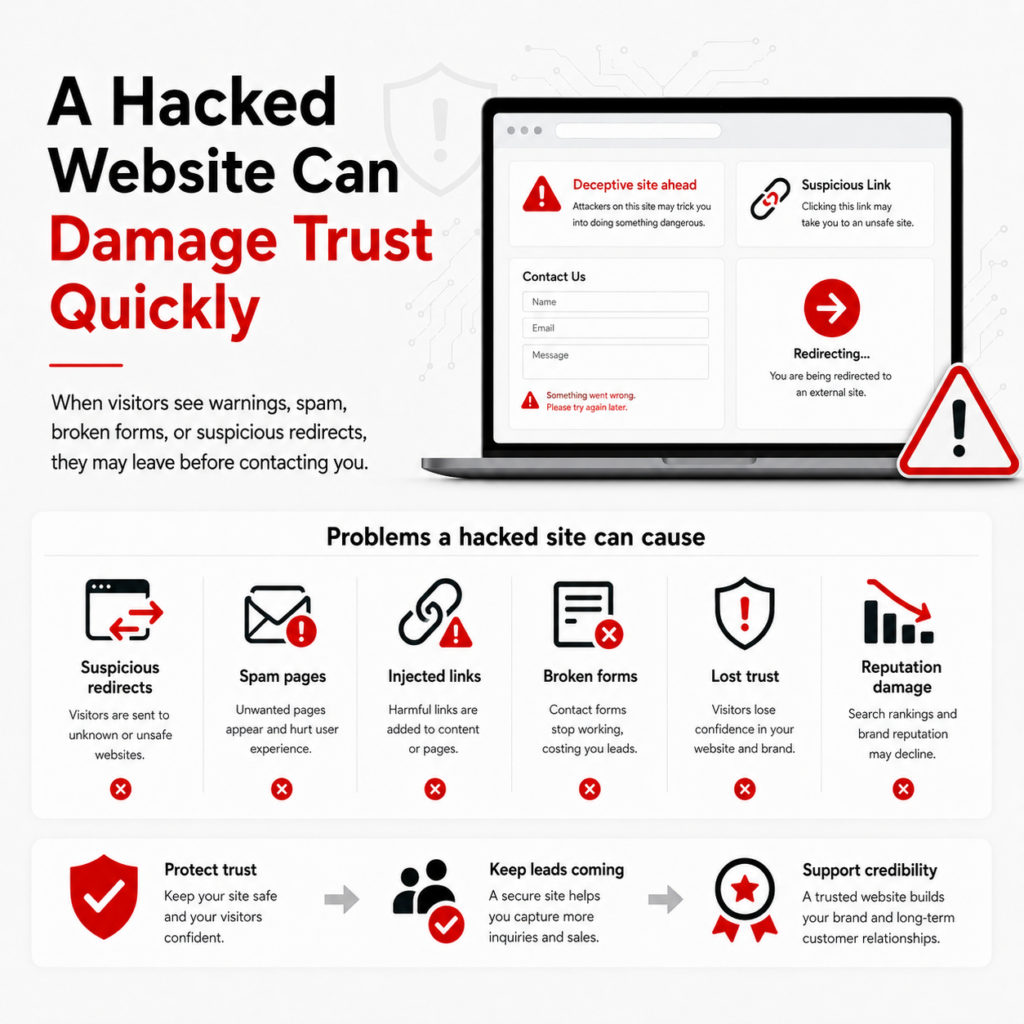
If they see browser warnings, suspicious redirects, spam content, broken forms, or strange links, they may not stay long enough to contact you.
A hacked website can create problems such as:
- Visitors being redirected to suspicious websites
- Spam pages appearing in search results
- Inappropriate links being injected into pages
- Malware warnings
- Broken contact forms
- Lost customer confidence
- Damaged brand reputation
For small businesses, trust matters. A website that feels unsafe can make a potential customer choose a competitor instead.
Google Can Detect Security Issues
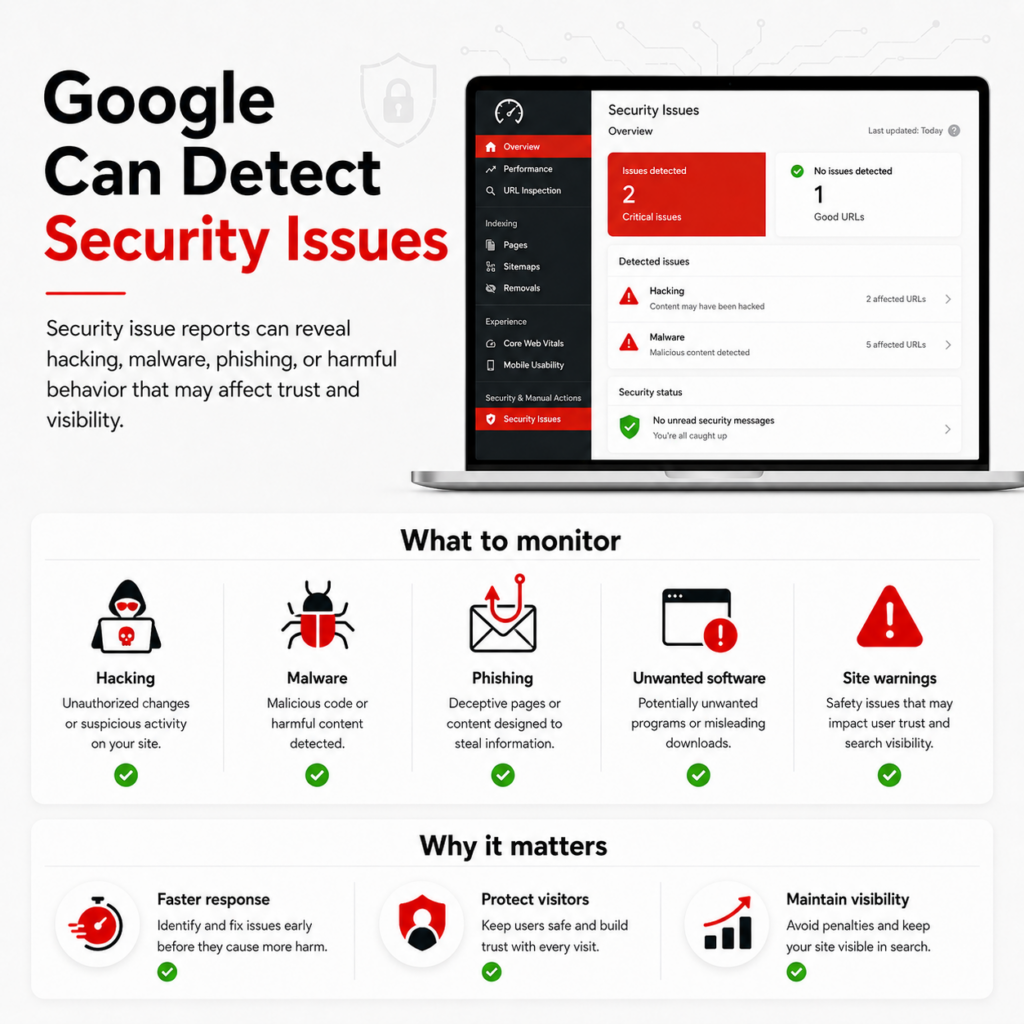
Google Search Console includes a Security Issues report that can show if Google detects harmful behavior on a website, such as hacking, malware, phishing, or unwanted software.
That matters because security problems can affect how your website appears to visitors and search engines.
If Google detects that a website has been hacked or may harm users, it may show warnings or report issues that need to be fixed. That can hurt confidence and reduce the chances that someone will click through to your website.
This is one reason small businesses should monitor website health and respond quickly if security issues appear.
Spam Content Can Hurt Search Visibility
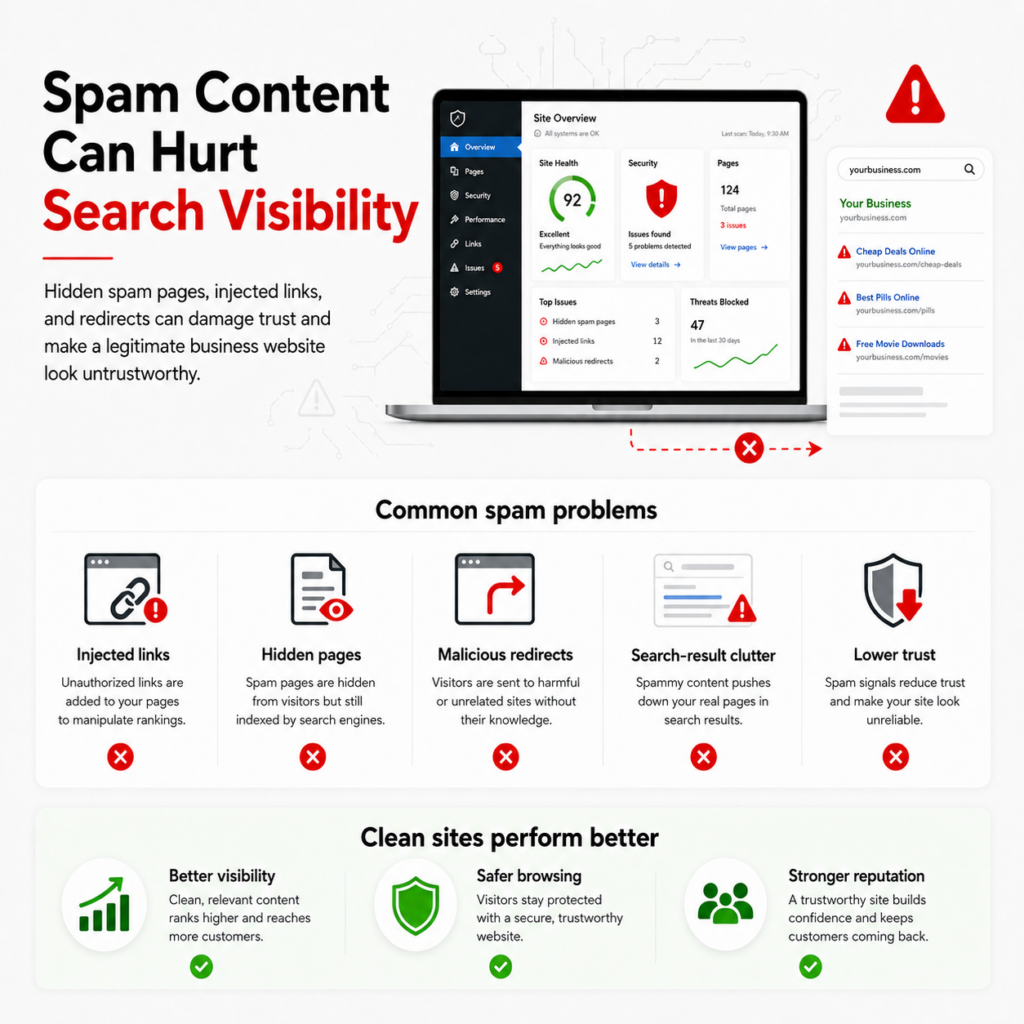
Hackers may inject spam pages, spam links, redirects, or hidden content into a compromised website. This can make a legitimate business website look untrustworthy or manipulative.
Google’s spam policies explain that spam tactics can lead to pages or entire websites ranking lower or being omitted from search results.
For small businesses, this is important because a hacked website may end up violating spam policies without the business owner realizing it.
We’ve seen this happen with clients that don’t maintain their website. They think it’s a one-and-done thing that never, ever needs any changes or updates.
The business owner may not have created the spam content, but the website can still be affected until the issue is found, cleaned up, and reviewed.
HTTPS and Secure Connections Still Matter
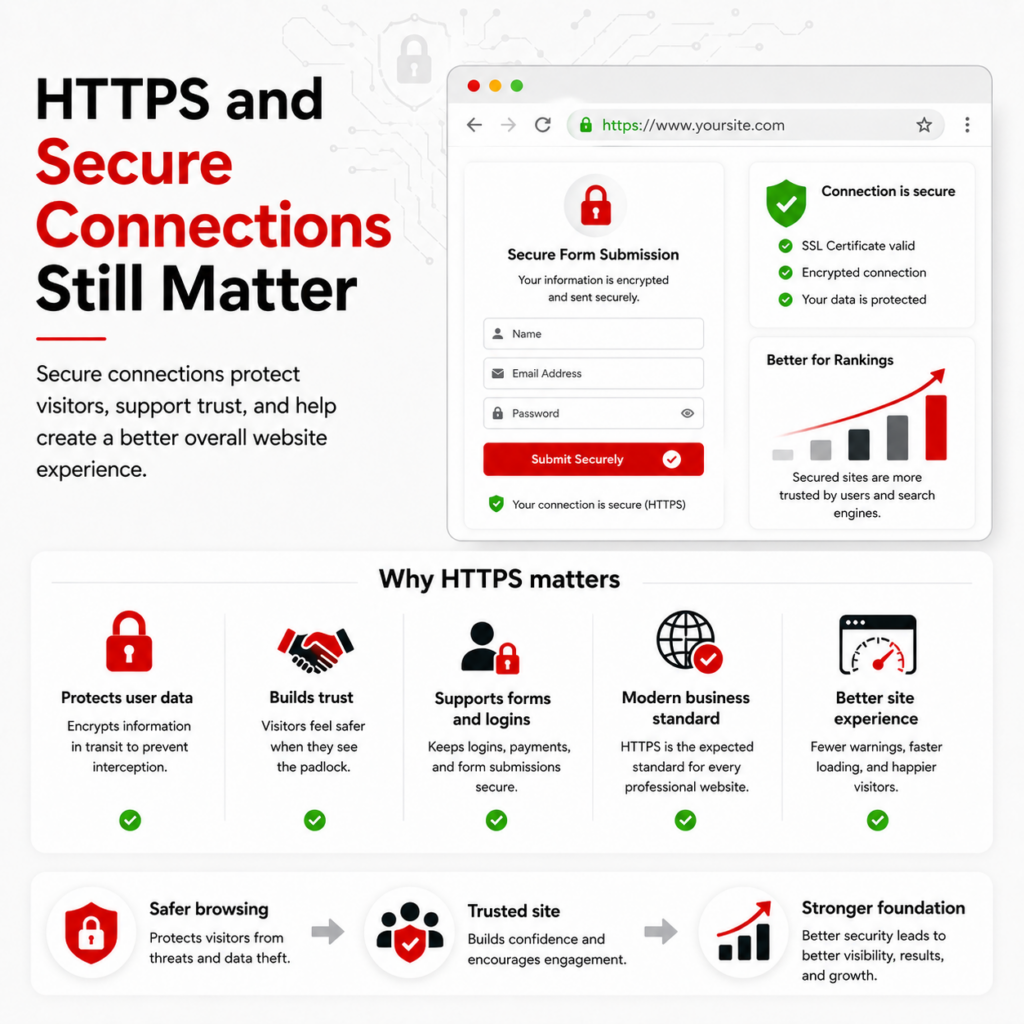
A secure website should use HTTPS, which helps protect the connection between the website and the visitor.
HTTPS is important because customers expect modern business websites to show as secure in the browser. It also helps protect information submitted through forms, logins, and other website interactions.
Google has also used HTTPS as a lightweight ranking signal, and secure browsing is part of a better overall page experience.
For small businesses, HTTPS is no longer optional. It is a basic expectation.
Website Uptime Supports SEO and Lead Generation
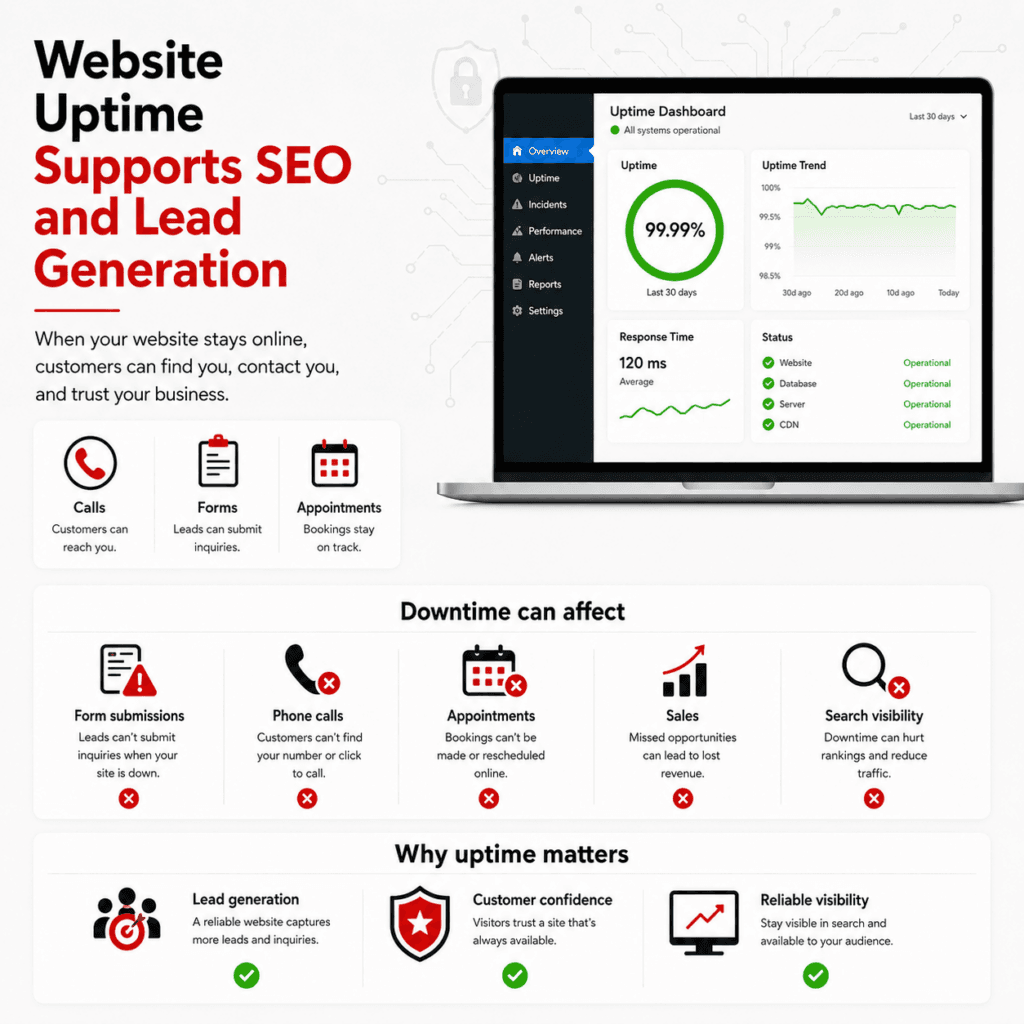
Security issues can lead to downtime.
If your website is offline, infected, or broken, customers may not be able to contact you. Search engines may also have trouble crawling and understanding your site.
Downtime can affect:
- Phone calls
- Form submissions
- Appointment requests
- Ecommerce sales
- Local search visibility
- Advertising campaigns
- Customer confidence
Even temporary website problems can create missed opportunities.
That is why ongoing monitoring, backups, hosting reliability, and maintenance are part of a healthy SEO foundation.
Slow or Broken Websites Can Reduce Results
Website security and performance often overlap.
Outdated plugins, bloated themes, poor hosting, malware, excessive scripts, and technical errors can all slow down a website or create issues for visitors.
A slow or broken website may lead to:
- Higher bounce rates
- Fewer form submissions
- Lower trust
- Poor mobile experience
- Frustrated visitors
- Missed leads
- Weaker SEO performance
A secure website should also be stable, fast, and easy to use.
WordPress Security Is an Ongoing Process
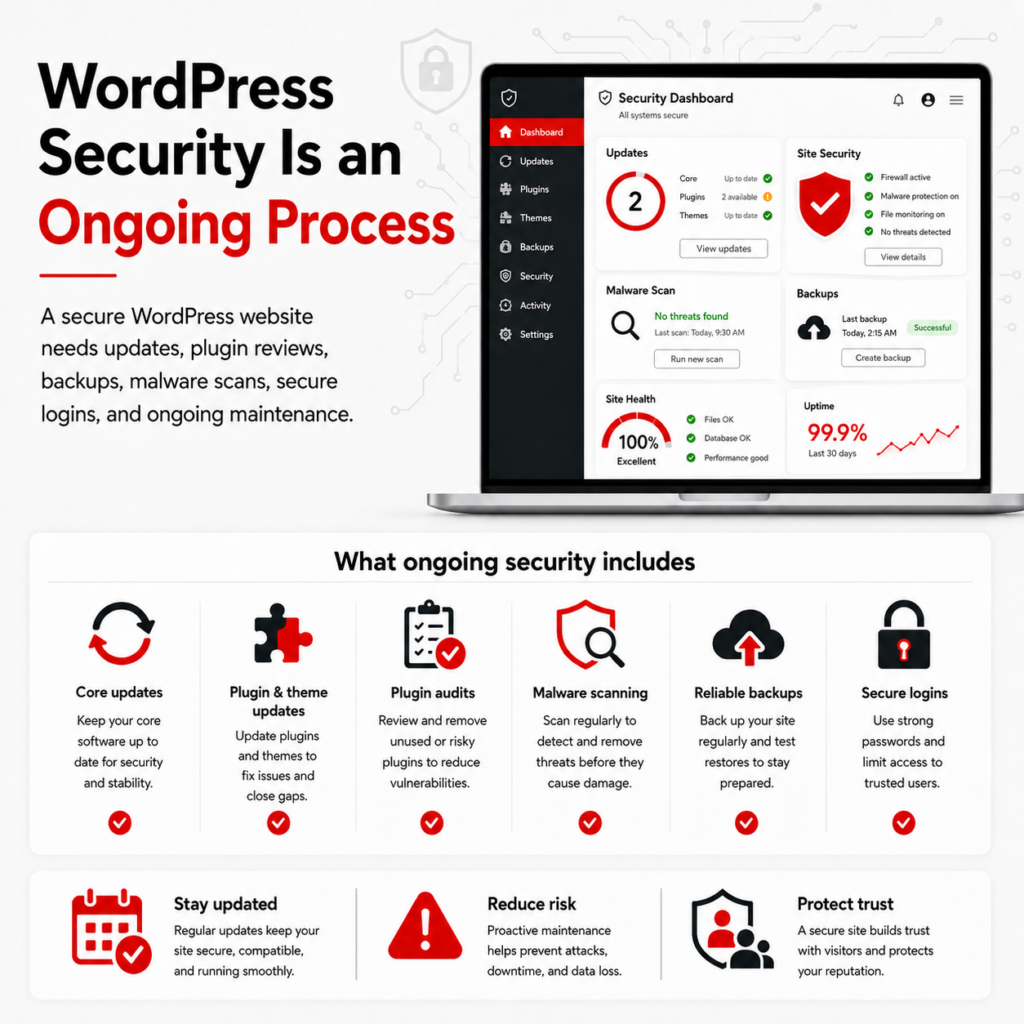
WordPress is a powerful platform for small business websites, but it needs ongoing care.
A secure WordPress website should include:
- WordPress core updates
- Plugin and theme updates
- Plugin audits
- Malware scanning
- Reliable backups
- Secure login practices
- Limited administrator access
- Quality hosting
- SSL/HTTPS support
- Monitoring and maintenance
WordPress.org notes that WordPress security is taken seriously, but security issues can still happen if basic precautions are not followed.
This is why WordPress should not be treated as a one-time project.
Plugin Problems Can Affect Security and SEO
Plugins are one of the biggest reasons WordPress is flexible, but they also need to be managed properly.
Too many plugins, outdated plugins, abandoned plugins, or poorly supported plugins can increase risk and affect performance.
Plugin issues may cause:
- Security vulnerabilities
- Slower page loading
- Broken layouts
- Form errors
- Conflicts after updates
- Malware risks
- Poor user experience
A regular plugin audit helps identify what is still needed, what should be updated, and what may need to be removed or replaced.
Backups Help Protect SEO Progress
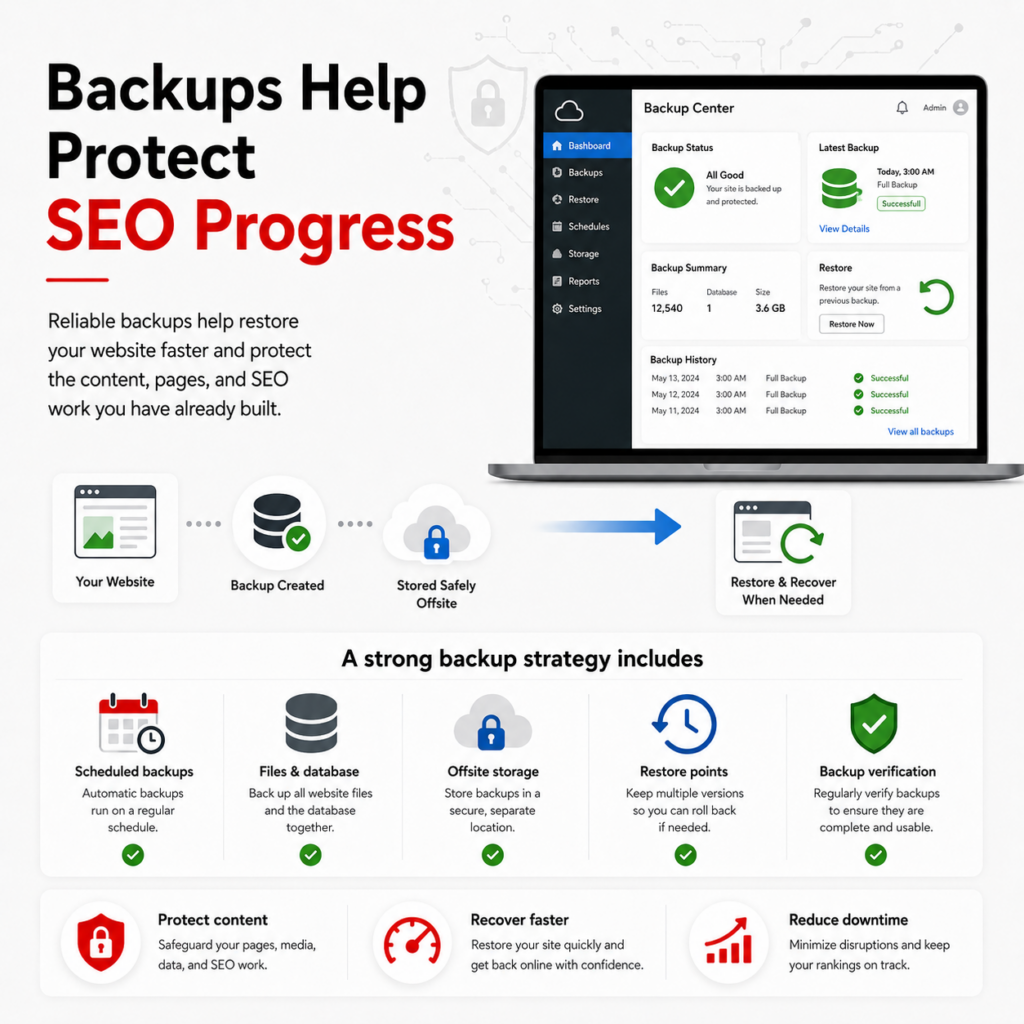
Your website content, service pages, blog posts, images, forms, and SEO improvements represent time and investment.
If your website breaks or gets hacked, a reliable backup can help restore the site faster and protect the work you have already done.
A strong backup strategy should include:
- Regular scheduled backups
- File and database backups
- Offsite or separate storage
- Restore points
- Backup verification
- More frequent backups for active websites
Backups are not just a technical safety net. They help protect your online presence.
Malware Scanning Helps Catch Problems Early
Malware is not always obvious.
A website can look normal to visitors while hidden spam, suspicious files, injected code, or malicious redirects exist in the background.
Regular malware scanning can help detect:
- Suspicious files
- Hidden spam content
- Malicious redirects
- Injected code
- Unauthorized file changes
- Blacklist warnings
The earlier an issue is found, the easier it may be to clean up and reduce damage.
Managed WordPress Hosting Can Strengthen the Foundation
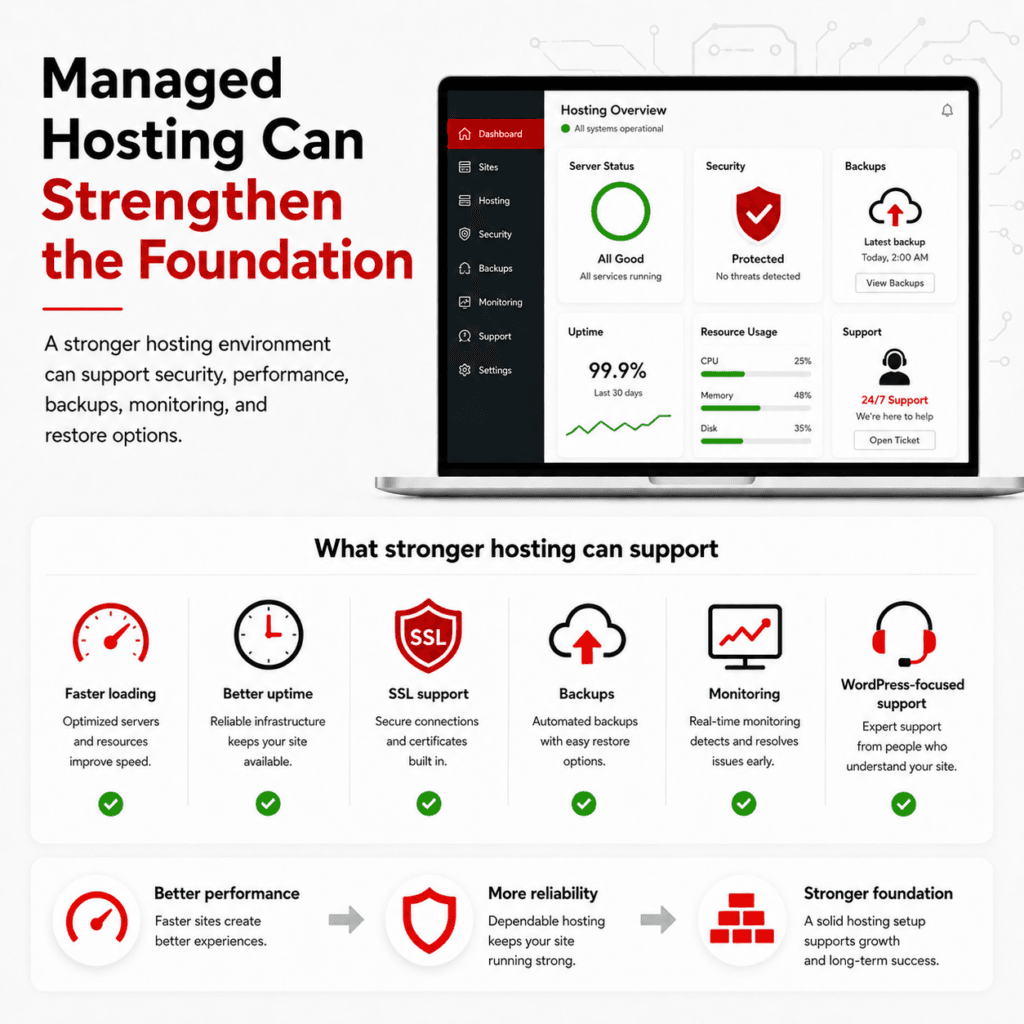
Hosting plays an important role in website security and SEO.
A better hosting environment can support:
- Faster loading
- Better uptime
- SSL support
- Server-level security
- Backups
- Malware scanning
- Update workflows
- Performance monitoring
- Restore options
- WordPress-specific support
Managed WordPress hosting does not replace website maintenance, but it can provide a stronger foundation than basic hosting.
For small businesses that depend on their website for leads, visibility, or customer trust, managed WordPress hosting may be worth reviewing.
Security and SEO Work Best Together
A strong SEO strategy should not ignore website security.
Good content and local visibility are important, but they work best when the website is secure, fast, reliable, and maintained.
Security supports SEO by helping your website provide:
- Safer visitor experience
- Better uptime
- Cleaner content
- Fewer technical disruptions
- Stronger trust
- Better performance
- More reliable lead generation
The goal is not just to rank. The goal is to create a website that customers can trust and use.
What Small Businesses Should Do Now
If you own or manage a small business website, now is a good time to review your website health.
Start by asking:
- Is my website secure with HTTPS?
- Are WordPress core, plugins, and themes updated?
- Do I have reliable backups?
- Is my site scanned for malware?
- Are there unknown administrator users?
- Are my plugins still needed and supported?
- Is my hosting still the right fit?
- Is my website fast and mobile-friendly?
- Are my forms working properly?
- Is my website supporting SEO and lead generation?
Small improvements made consistently can help protect your website, search visibility, and business reputation.
How TK Internet Marketing Can Help
At TK Internet Marketing, we help small businesses improve and protect their online presence through WordPress maintenance, website security reviews, managed WordPress hosting guidance, Local SEO, and consulting.
Our website support services can help with:
- WordPress updates
- Plugin audits
- Malware scanning
- Backups
- Website security reviews
- Performance checks
- Managed WordPress hosting guidance
- Local SEO support
- Technical troubleshooting
If you are not sure whether your website is secure, updated, backed up, or supporting your SEO goals, a website review is a smart place to start.
Request a Website Review
Your website should do more than look good. It should be secure, reliable, visible, and ready to support your business.
Contact TK Internet Marketing to request a WordPress website review and identify what may need attention.
Frequently Asked Questions About Website Security and SEO
Can website security affect SEO?
Yes. Website security can affect trust, uptime, page experience, content quality, and search visibility. A hacked or unreliable site can create problems for both visitors and search engines.
Can a hacked website hurt search rankings?
Yes. A hacked website may contain spam content, suspicious redirects, malware, or unwanted links. These issues can hurt trust and may affect how the site appears in search results.
Is HTTPS important for SEO?
Yes. HTTPS helps protect users and is a basic expectation for modern websites. Google has also used HTTPS as a lightweight ranking signal.
Does WordPress security matter for local SEO?
Yes. Local SEO depends on trust, visibility, content, and a healthy website. If a WordPress site is hacked, slow, broken, or unreliable, it can hurt the business’s online presence.
How often should small businesses review website security?
Small businesses should review website security regularly, especially after updates, plugin changes, hosting changes, or suspicious activity. Ongoing maintenance is better than waiting until something breaks.
What should a website security review include?
A website security review should include updates, plugins, themes, backups, malware scans, administrator users, SSL/HTTPS, hosting, performance, forms, and overall site health.
What is the first step?
Start with a WordPress website review. This can help identify outdated plugins, missing backups, security risks, hosting issues, and technical SEO concerns.
