
Google Search is changing again, and small business owners need to pay attention.
With AI Overviews, AI Mode, and more conversational search results becoming part of the search experience, customers are no longer just typing simple phrases like “plumber near me” or “best chiropractor in Plano.” They are asking longer, more specific questions such as:
- “Who is the best local chiropractor for back pain near me?”
- “What should I look for when hiring a remodeling contractor in Frisco?”
- “Which local pest control company handles termite inspections?”
- “What is the best WordPress consultant for a small business website?”
This shift matters because Google is becoming better at understanding intent, context, reputation, and helpful content. For local businesses, that means SEO is no longer just about having a few keywords on a page. It is about proving that your business is relevant, trustworthy, local, and helpful.
What Is Google AI Search?

Google AI Search refers to the growing use of artificial intelligence in Google Search results. This includes features like AI Overviews and AI Mode, which can summarize information, answer complex questions, and guide users toward helpful resources. Google explains these as part of its broader AI features in Google Search.
Instead of showing only a traditional list of blue links, Google may now provide a summarized answer, related follow-up questions, business listings, website links, videos, images, and other helpful content.
For local businesses, this creates both a challenge and an opportunity.
The challenge is that competition for attention is increasing. The opportunity is that businesses with strong websites, helpful content, accurate local listings, and a clear service area may have more ways to be discovered.
Why This Matters for Local Businesses
Local SEO has always been about helping nearby customers find your business when they need your services. But AI-powered search makes quality and clarity even more important.
Google needs to understand:
- What your business does
- Where you provide services
- Who you help
- What makes your business credible
- Whether your website content answers real customer questions
- Whether your Google Business Profile and website information are consistent
If that information is missing, outdated, thin, or confusing, your business may have a harder time standing out in local search results.
Keywords Still Matter, But They Are Not Enough
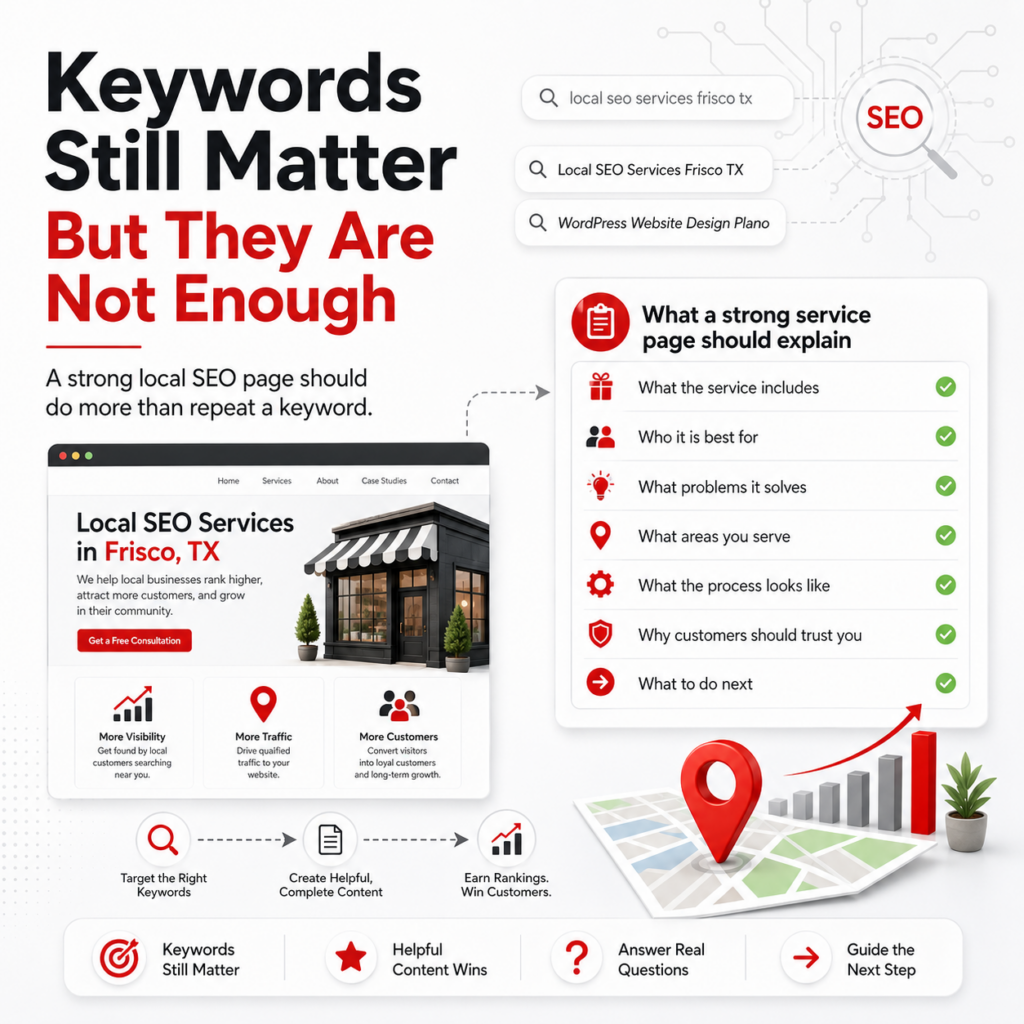
Keywords are still important, but they are no longer the whole strategy.
In the past, a business might create a page targeting “Local SEO Services Frisco TX” or “WordPress Website Design Plano.” That still has value. However, Google is also looking at the overall usefulness of the content.
A strong local SEO page should do more than repeat a keyword. It should answer questions a real customer may have before contacting you.
For example, a good service page might explain:
- What the service includes
- Who the service is best for
- What problems it solves
- What areas the business serves
- What the process looks like
- Why the business is qualified to help
- What the customer should do next
This kind of content is more useful for visitors and easier for search engines to understand.
Your Google Business Profile Is More Important Than Ever

For many local businesses, the Google Business Profile is one of the most visible parts of their online presence.
When someone searches for a local service, Google may show map results, business profiles, reviews, photos, service details, posts, and contact options before the user ever visits a website.
Google says local ranking is influenced by factors such as relevance, distance, and prominence, which is why keeping your Google Business Profile accurate and complete is so important.
That means your Google Business Profile should not be treated as a one-time setup task. It should be actively maintained.
Important areas to review include:
- Business name, address, phone number, and website
- Primary and secondary categories
- Service areas
- Business hours
- Services and descriptions
- Photos
- Reviews and review responses
- Google Business Profile posts
- Appointment or contact links
A complete and active profile gives Google and potential customers more confidence in your business.
Helpful Content Can Improve Local Visibility

Google continues to emphasize helpful, people-first content, which means your website should answer real customer questions instead of simply repeating keywords. For small businesses, that means your website should answer the questions your customers are already asking.
Examples of helpful local content include:
- Service pages for each major offering
- Location-focused pages where appropriate
- Blog posts that answer common customer questions
- FAQs based on real sales conversations
- Case studies or project examples
- Before-and-after content
- Educational guides
- Localized service explanations
For example, a remodeling contractor could write about aging-in-place remodeling in Plano, Frisco, and Allen. A chiropractor could explain soft tissue therapy for people dealing with stiffness or limited mobility. A pest control company could explain when homeowners should call for termite inspections in North Texas.
The goal is not to publish random content. The goal is to create useful content that connects your services with what local customers are searching for.
Website Structure Still Matters

AI may be changing search, but technical SEO still matters.
Your website should be easy for both visitors and search engines to understand. That means your pages need clear headings, organized navigation, descriptive page titles, internal links, and content that is easy to read.
For local businesses, Local Business structured data can also help search engines better understand important business details such as your name, address, phone number, hours, and services.
Google’s SEO Starter Guide also reinforces the importance of clear, useful pages that help both people and search engines understand your website.
Important website elements include:
- Clear service pages
- Local contact information
- Fast-loading pages
- Mobile-friendly design
- Secure hosting
- Proper title tags and meta descriptions
- Image alt text
- Schema markup where appropriate
- Internal links between related pages
- Clear calls to action
A website that is confusing, slow, outdated, or poorly organized may struggle even if the business itself is excellent.
Reviews and Reputation Support Local SEO

Reviews are not just for potential customers. They also help reinforce trust.
A steady review strategy can support your local presence by showing that your business is active, trusted, and serving real customers.
Small businesses should focus on:
- Asking satisfied customers for reviews
- Responding professionally to reviews
- Highlighting service-related keywords naturally in responses
- Monitoring reputation across platforms
- Keeping testimonials current on the website
A strong reputation can improve the way customers perceive your business before they ever contact you.
AI Search Makes Brand Authority More Important

As Google’s search experience becomes more advanced, brand authority matters more.
For local businesses, brand authority does not mean becoming a national company. It means becoming a trusted, recognizable option in your local market.
You can build authority by:
- Publishing helpful local content
- Keeping your website updated
- Maintaining your Google Business Profile
- Earning consistent reviews
- Using consistent business information across directories
- Sharing educational content on social media
- Building internal links between related website pages
- Creating content that reflects real experience
The more consistent and helpful your online presence is, the easier it is for customers and search engines to understand why your business is relevant.
What Small Businesses Should Do Now

If you own or manage a local business, now is a good time to review your online presence.
Start with these action steps:
1. Review Your Website Content
Make sure your core service pages clearly explain what you do, who you help, and where you provide services.
2. Update Your Google Business Profile
Check your categories, services, photos, hours, service areas, and business description.
3. Add Helpful FAQs
Answer the questions customers commonly ask before hiring you.
4. Improve Local Signals
Mention your service areas naturally where appropriate. Avoid keyword stuffing, but make your local relevance clear.
5. Strengthen Your Reviews
Ask happy customers to leave reviews and respond to reviews consistently.
6. Audit Your Website’s Technical Health
Check speed, mobile usability, broken links, outdated plugins, security issues, and SEO basics.
7. Publish Better Content
Focus on quality over quantity. One helpful article is better than several thin, generic posts.
Local SEO Is Not Going Away
AI is changing how people search, but local SEO is not going away. In many ways, it is becoming more important.
Customers still need local companies. They still want trusted service providers. They still compare businesses before calling, booking, or requesting a quote.
The businesses that will benefit most are the ones that make it easy for Google and customers to understand who they are, what they do, where they serve, and why they can be trusted.
Need Help Reviewing Your Local SEO?
If you are unsure how your business appears in Google Search, Google Maps, or AI-powered search results, a Local SEO Audit is a smart place to start.
At TK Internet Marketing, we review your website, Google Business Profile, local visibility, content, and SEO opportunities so you can understand what is working, what needs attention, and where your business can improve.
Schedule a Local SEO Audit and find out how your business can stay visible as search continues to change.
Frequently Asked Questions About Google AI Search and Local SEO
How does AI Search affect local SEO?
AI Search can change how Google summarizes and presents information to users. For local businesses, this makes accurate business information, helpful website content, reviews, and Google Business Profile optimization even more important.
Is Google Business Profile still important?
Yes. Google Business Profile remains one of the most important tools for local visibility. It helps customers find your business in Google Search and Maps and gives Google important information about your location, services, reviews, and business activity.
Do small businesses still need blog content?
Yes, but the content should be helpful and relevant. Blog posts should answer real customer questions, explain services, support local search topics, and connect naturally to your business offerings.
Are keywords still important for SEO?
Yes, keywords still matter, but they should be used naturally within helpful, well-structured content. Google is increasingly focused on meaning, intent, and usefulness, not just exact-match keyword repetition.
What is the first step to improving local SEO?
The first step is to review your website, Google Business Profile, reviews, and local listings. A Local SEO Audit can help identify gaps and opportunities.
