
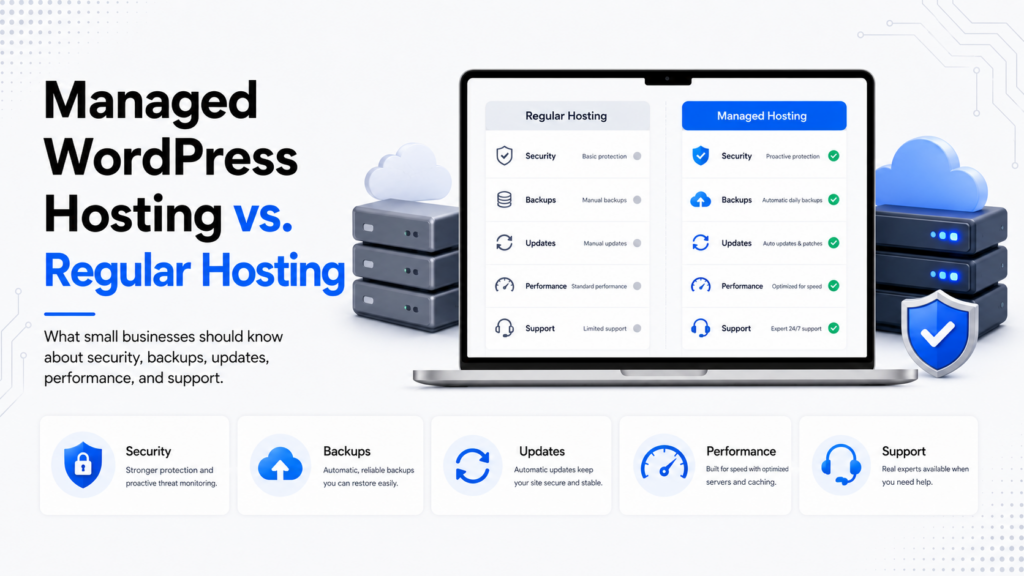
Choosing website hosting can be confusing for small business owners.
Many hosting plans sound similar. They may all mention storage, bandwidth, email, SSL, backups, security, or support. But not all hosting is designed with the same level of WordPress care.
For a simple business website, regular hosting may seem like enough at first. But as your website becomes more important to your business, you may need more than basic server space.
That is where managed WordPress hosting can make a difference.
Managed WordPress hosting is designed to provide a more WordPress-focused environment, often with added support for updates, security, backups, performance, monitoring, and recovery.
For small businesses, the question is not just, “Where can I host my website?”
The better question is:
Who is helping make sure my WordPress website stays secure, updated, backed up, and working properly?
What Is Regular Web Hosting?
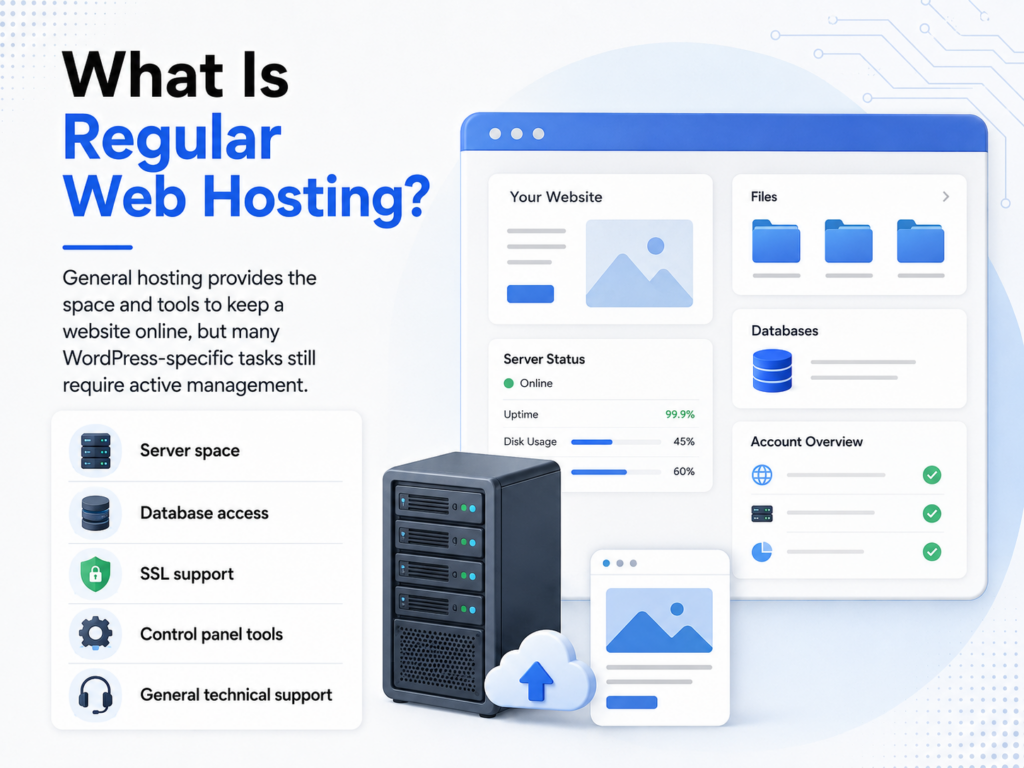
Regular web hosting is a general hosting service that provides space for your website files, database, and related resources.
It may support many types of websites, not just WordPress. Depending on the hosting company and plan, it may be used for static websites, PHP applications, WordPress, Joomla, Drupal, custom scripts, email hosting, file storage, and more.
Regular hosting may include:
- Server space
- Basic website file storage
- Database access
- SSL support
- Email hosting options
- Control panel access
- General technical support
- Basic backups, depending on the plan
Regular hosting can work for many websites, but it often places more responsibility on the website owner or developer.
That means someone still needs to manage WordPress updates, plugins, themes, backups, security scans, performance, and troubleshooting.
For a small business owner, that can become overwhelming.
What Is Managed WordPress Hosting?
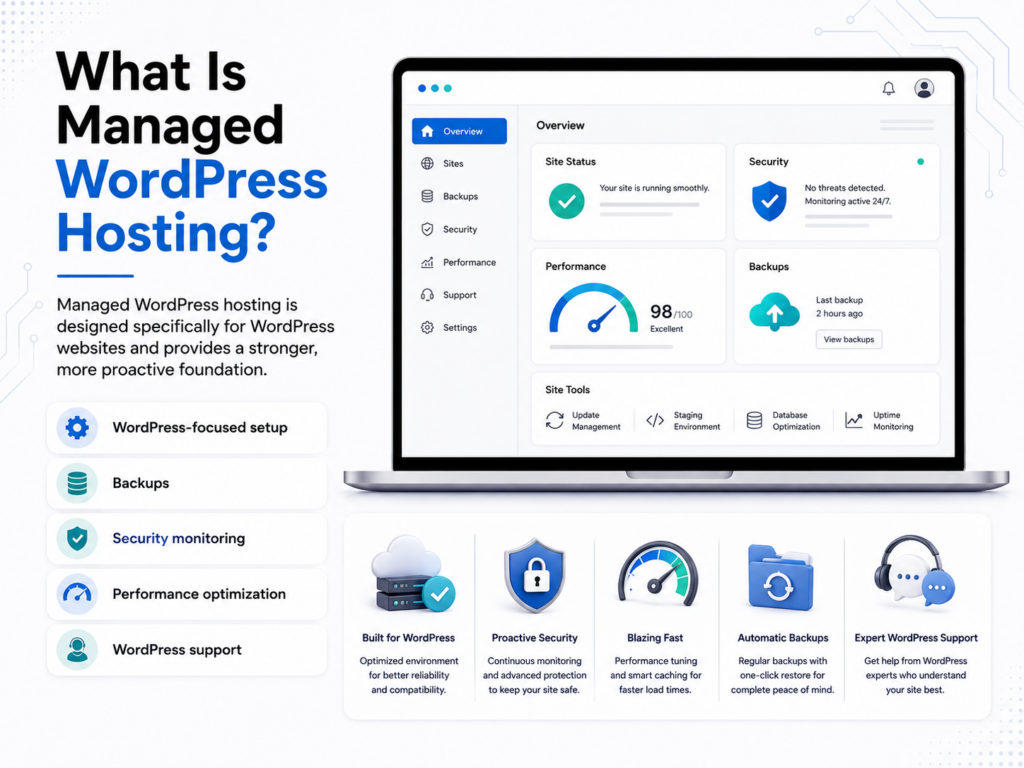
Managed WordPress hosting is hosting designed specifically for WordPress websites.
Instead of providing only general server space, managed WordPress hosting typically focuses on WordPress-specific needs, including security, performance, updates, backups, and support.
Managed WordPress hosting may include:
- WordPress-focused server configuration
- Automatic or managed backups
- Security monitoring
- Malware scanning
- SSL support
- Performance optimization
- Caching
- Uptime monitoring
- WordPress update support
- Plugin and theme review
- Staging or safer update workflows
- WordPress-specific troubleshooting
Every provider is different, so the exact features may vary. But the purpose is usually the same: to give WordPress websites a stronger foundation and reduce the burden on the business owner.
If you are looking for a WordPress-focused hosting option, TK Internet Marketing offers managed WordPress hosting for small business websites.
Why Hosting Matters More Than Many Business Owners Realize
To many small business owners, hosting feels invisible until something goes wrong.
You may not think about hosting when your website loads normally, contact forms work, and customers can find you online.
But hosting affects important parts of your website, including:
- Speed
- Uptime
- Security
- Backups
- Software compatibility
- SSL certificates
- Database performance
- Recovery options
- User experience
- SEO support
A poor hosting setup can lead to slow pages, downtime, security issues, update problems, and technical frustrations.
Even a great-looking website can struggle if the hosting environment is not reliable.
WordPress Has Specific Technical Requirements
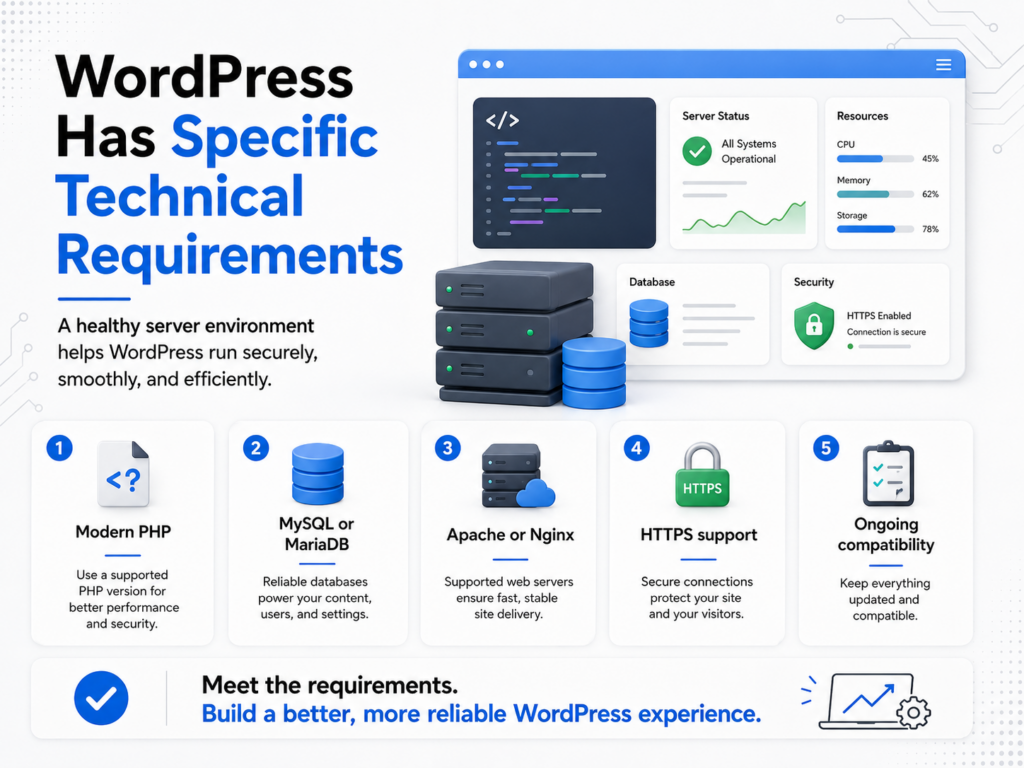
WordPress is powerful software, but it needs the right server environment to run well.
WordPress.org recommends hosting that supports modern versions of PHP, MySQL or MariaDB, Nginx or Apache with mod_rewrite, and HTTPS support.
These technical requirements matter because WordPress depends on server software, database performance, security settings, and ongoing compatibility.
For most small business owners, these details are not things they want to manage personally. But someone still needs to make sure the website is running in a healthy environment.
That is one reason managed WordPress hosting can be helpful.
Regular Hosting May Leave More Work on You
With regular hosting, the server may be available, but many WordPress-specific tasks are still your responsibility.
That may include:
- Updating WordPress core
- Updating plugins
- Updating themes
- Checking for plugin conflicts
- Monitoring security
- Running malware scans
- Managing backups
- Restoring the site if something breaks
- Reviewing performance
- Troubleshooting errors
- Making sure PHP and server settings are compatible
If you have a web developer or agency managing these items, regular hosting may be workable.
But if no one is actively maintaining the site, regular hosting can become risky over time.
A Real-World Example: Hosting Is Only Part of the Picture
We have worked with small business websites hosted on regular hosting plans that looked fine on the surface but were not being actively maintained behind the scenes.
In one case, the website itself was fairly simple, but the WordPress installation still needed ongoing attention. Plugins needed updates, backups needed to be confirmed, security needed to be reviewed, and performance needed to be monitored.
The hosting was not necessarily the problem. The bigger issue was that no one had a clear process for maintaining the website.
That is an important lesson for small business owners. Regular hosting can work when a website is actively managed by someone who understands WordPress. But if updates, backups, security scans, and plugin reviews are being ignored, even a simple website can become risky over time.
Managed WordPress hosting can help by providing a stronger foundation, but it works best when paired with ongoing WordPress maintenance. Hosting keeps the site online. Maintenance keeps the site healthy.
Managed WordPress Hosting Can Help Reduce Risk
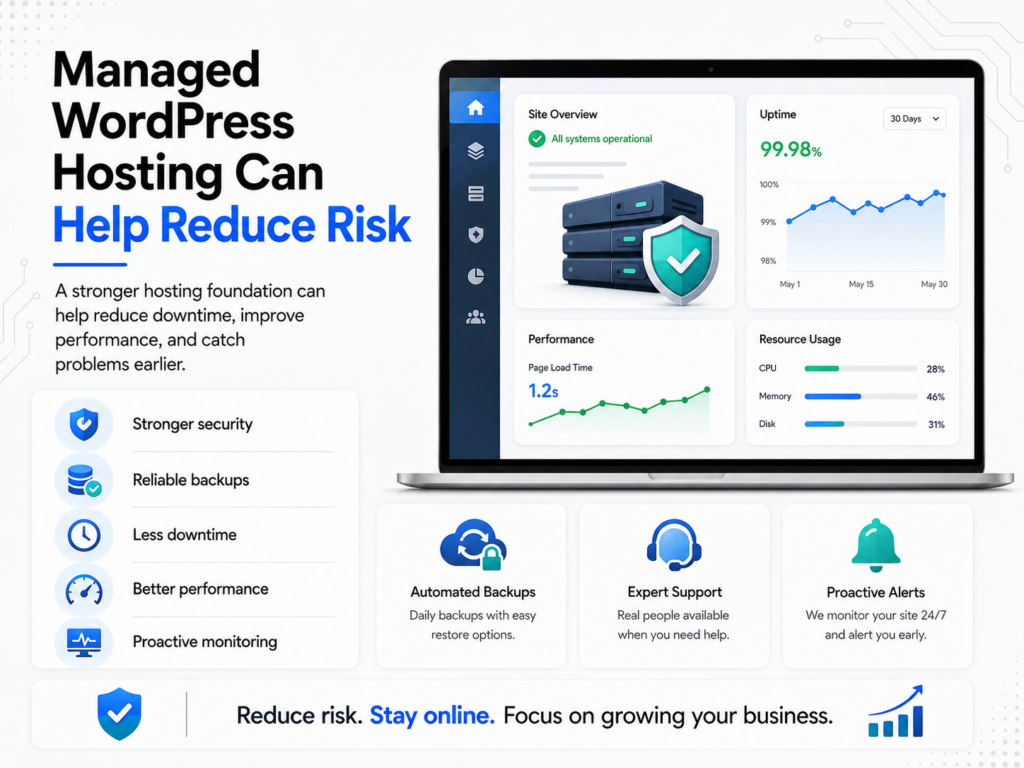
Managed WordPress hosting does not make a website immune to every problem. No hosting service can promise that.
WordPress.org notes that the WordPress Security Team works to identify and resolve security issues in WordPress core and provide guidance across the ecosystem.
However, it can reduce risk by providing a better foundation and a more proactive support structure.
A strong managed WordPress hosting and maintenance setup can help with:
- Keeping software current
- Reducing avoidable downtime
- Improving performance
- Supporting secure configuration
- Monitoring for suspicious activity
- Creating reliable backups
- Improving restore options
- Catching problems earlier
- Providing WordPress-focused help
For small businesses, this can provide more confidence and fewer surprises.
Security Is a Major Difference
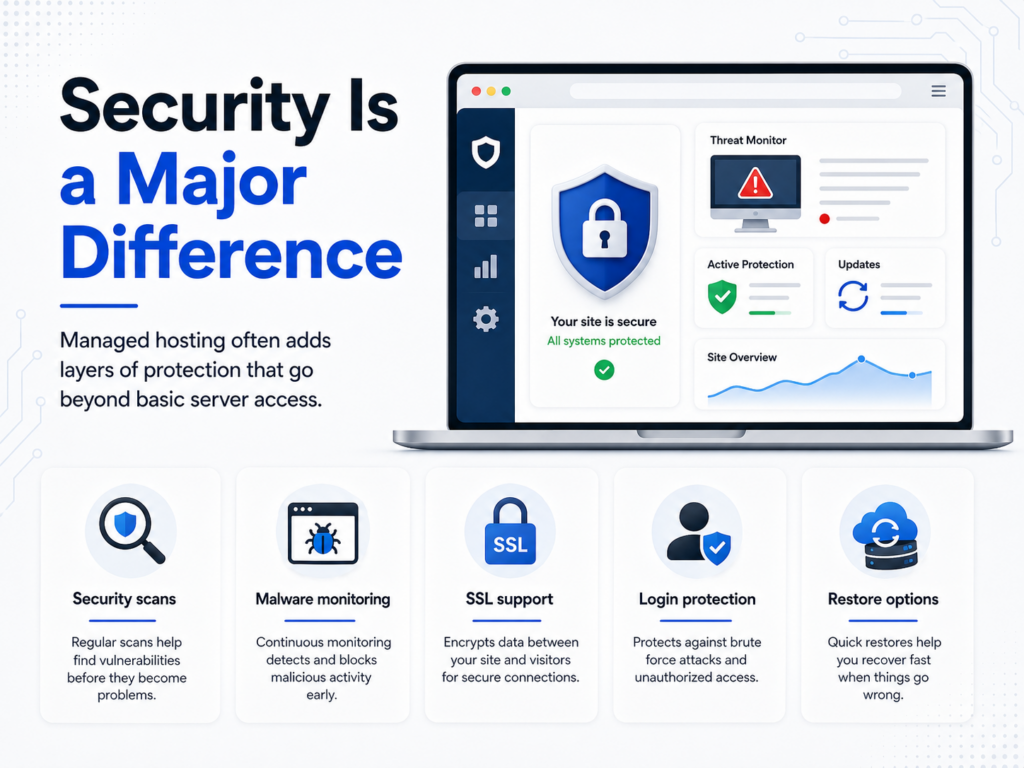
Security is one of the biggest reasons small businesses should review their hosting.
Regular hosting may include some server-level security, but it may not include WordPress-specific protection, plugin auditing, malware scanning, or ongoing monitoring.
Managed WordPress hosting may provide more protection through:
- Security scans
- Malware monitoring
- Login protection
- SSL support
- Server-level protections
- Backup and restore options
- Update workflows
- WordPress-specific troubleshooting
Security still requires ongoing attention. A secure hosting environment is only one part of the picture.
WordPress.org explains that WordPress takes security seriously, but issues can still occur when basic security precautions are not followed.
Your website also needs strong passwords, up-to-date plugins and themes, limited administrator access, trusted plugins, and reliable backups.
Backups Are Not Optional
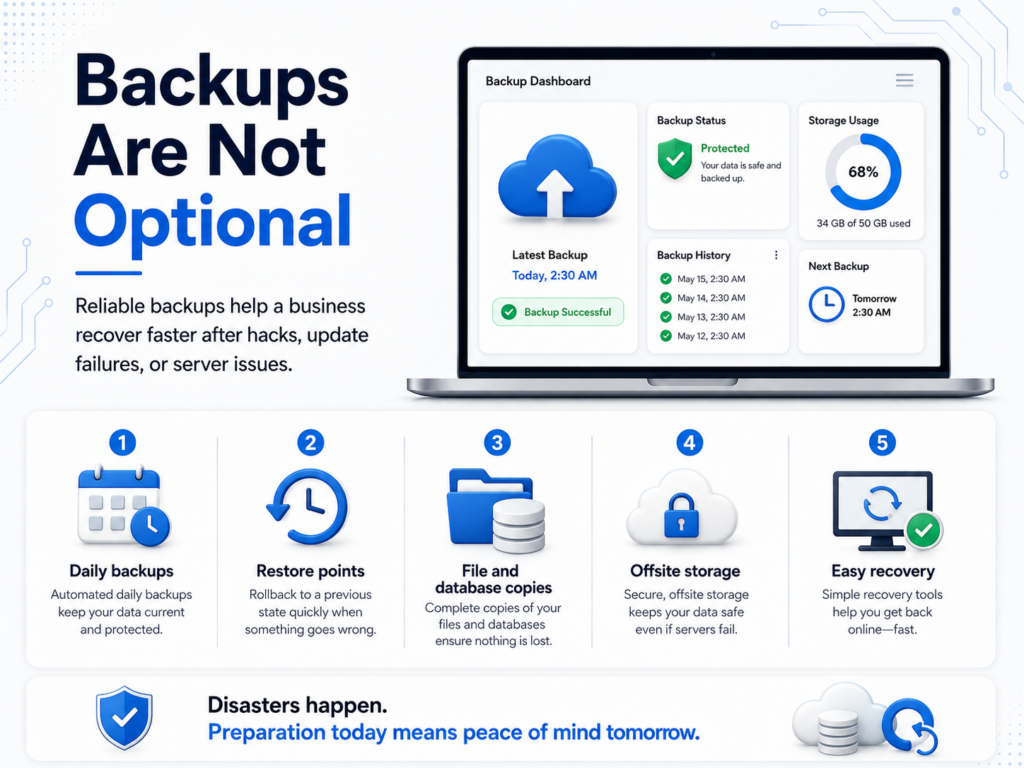
Backups are an important part of website protection.
If your website is hacked, broken by an update, damaged by user error, or affected by a server problem, a backup can help you recover faster.
WordPress.org’s backup documentation explains that a proper backup of your WordPress database and files can help restore things back to normal if data is erased or corrupted.
With regular hosting, backups may be limited, optional, or difficult to restore. Some providers offer backups, but the business owner may still need to confirm how often they run, how long they are stored, and how restores are handled.
Managed WordPress hosting often provides more structured backup options, such as:
- Daily backups
- Restore points
- File and database backups
- Offsite storage
- Easy restore options
- Backup monitoring
Before choosing hosting, every small business should know the answer to one important question:
If my website breaks today, how quickly can it be restored?
Updates Should Be Managed Carefully
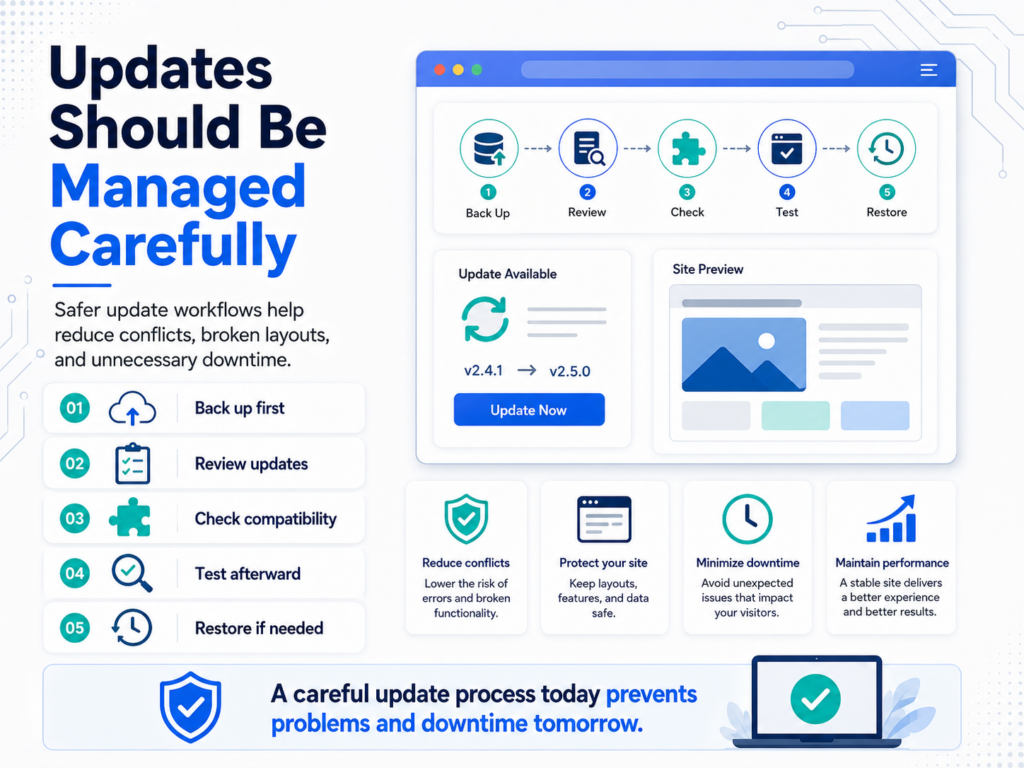
WordPress updates are important for security, performance, and compatibility.
But updates can sometimes create conflicts. A plugin update may affect a form, page layout, checkout process, calendar, or other website feature.
A safer update process may include:
- Backing up before updates
- Reviewing available updates
- Checking plugin compatibility
- Updating trusted plugins and themes
- Testing the site afterward
- Restoring quickly if something breaks
Managed WordPress hosting combined with a maintenance plan can make this process more reliable.
The goal is not just to update WordPress. The goal is to update WordPress responsibly.
WordPress.org’s upgrade documentation recommends backing up your database and WordPress files and verifying those backups before attempting an upgrade.
Performance and SEO Are Connected
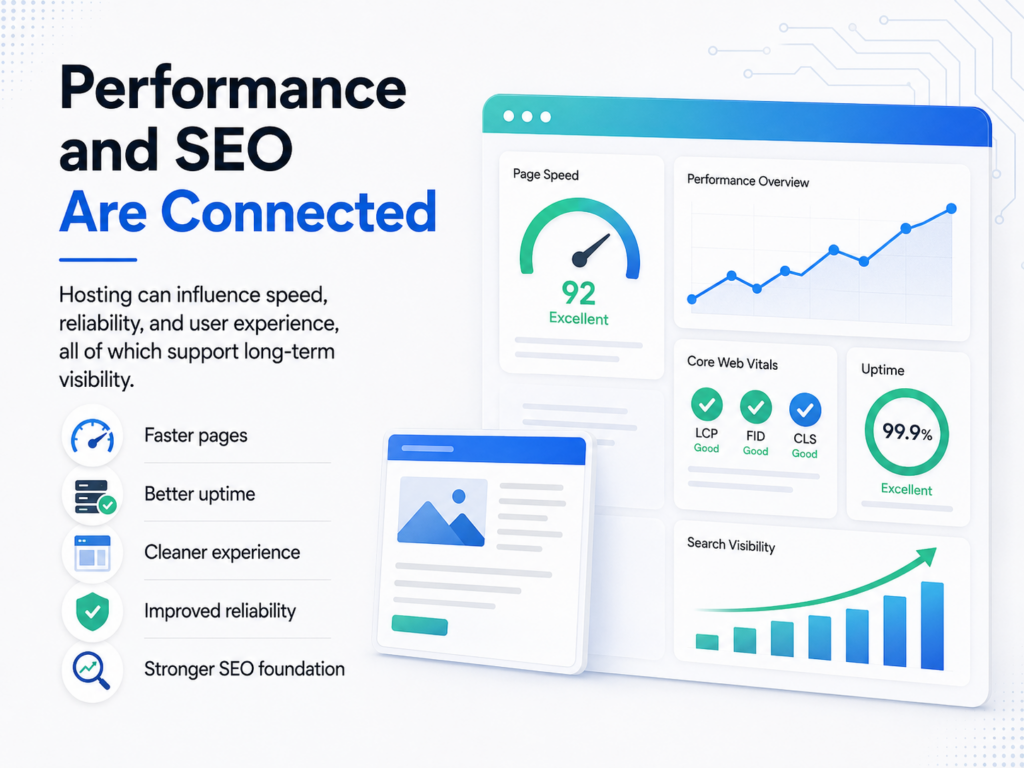
Website speed matters for user experience.
If your website loads slowly, visitors may leave before reading your content or contacting your business. Slow performance can also make your website feel outdated or unreliable.
Hosting can affect performance through:
- Server speed
- Caching
- Database optimization
- Image handling
- Resource limits
- CDN support
- PHP performance
- Uptime and reliability
Managed WordPress hosting often includes performance features designed specifically for WordPress.
This does not replace good website design, optimized images, clean code, or quality content. But hosting can play an important role in how well your website performs.
Support Matters When Something Breaks
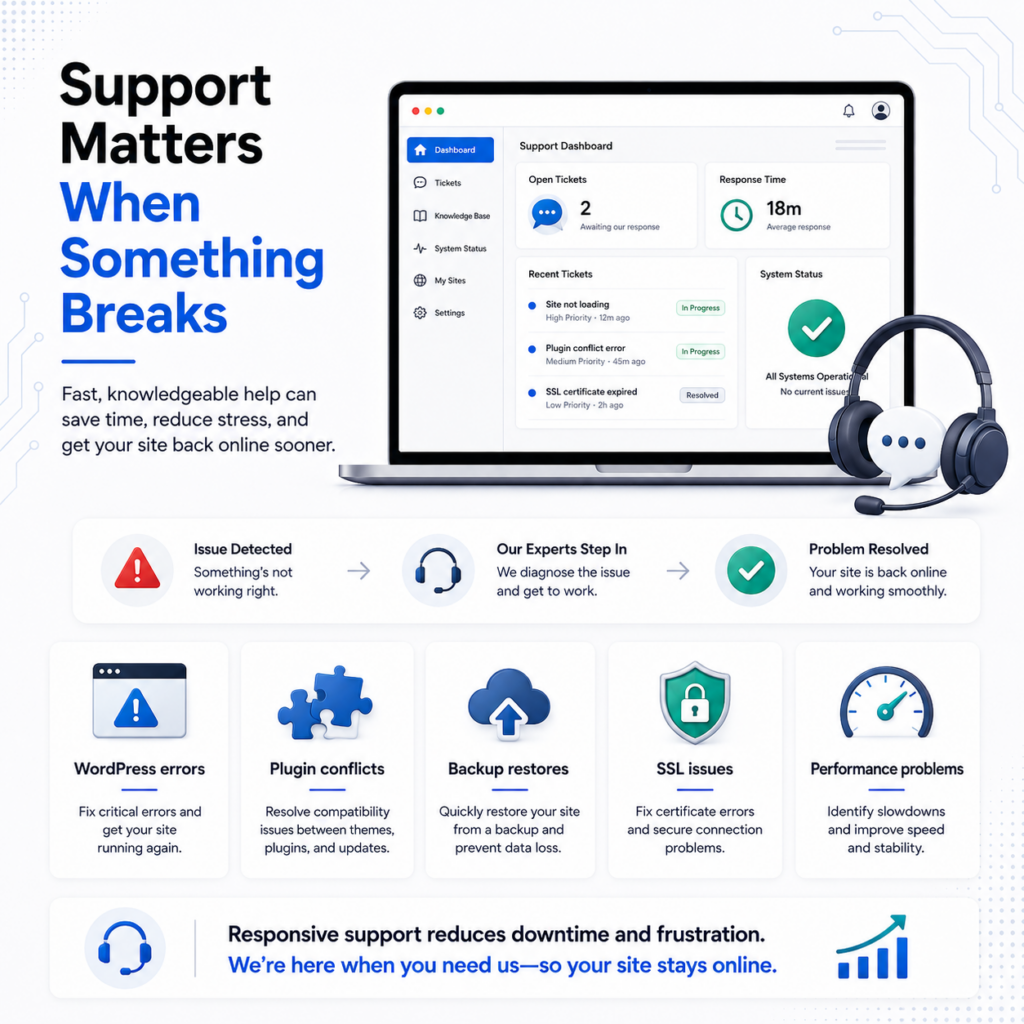
When a website problem happens, support becomes very important.
With regular hosting, support may focus mainly on the server, email, DNS, or control panel. They may not help much with plugin conflicts, WordPress errors, broken layouts, theme issues, or website-specific troubleshooting.
Managed WordPress support is typically more familiar with WordPress-related issues.
That may include help with:
- WordPress errors
- Plugin conflicts
- Update issues
- Malware warnings
- Performance problems
- Database issues
- Backup restores
- SSL or HTTPS issues
For small businesses, that kind of support can save time and reduce frustration.
Regular Hosting May Still Be Fine in Some Cases
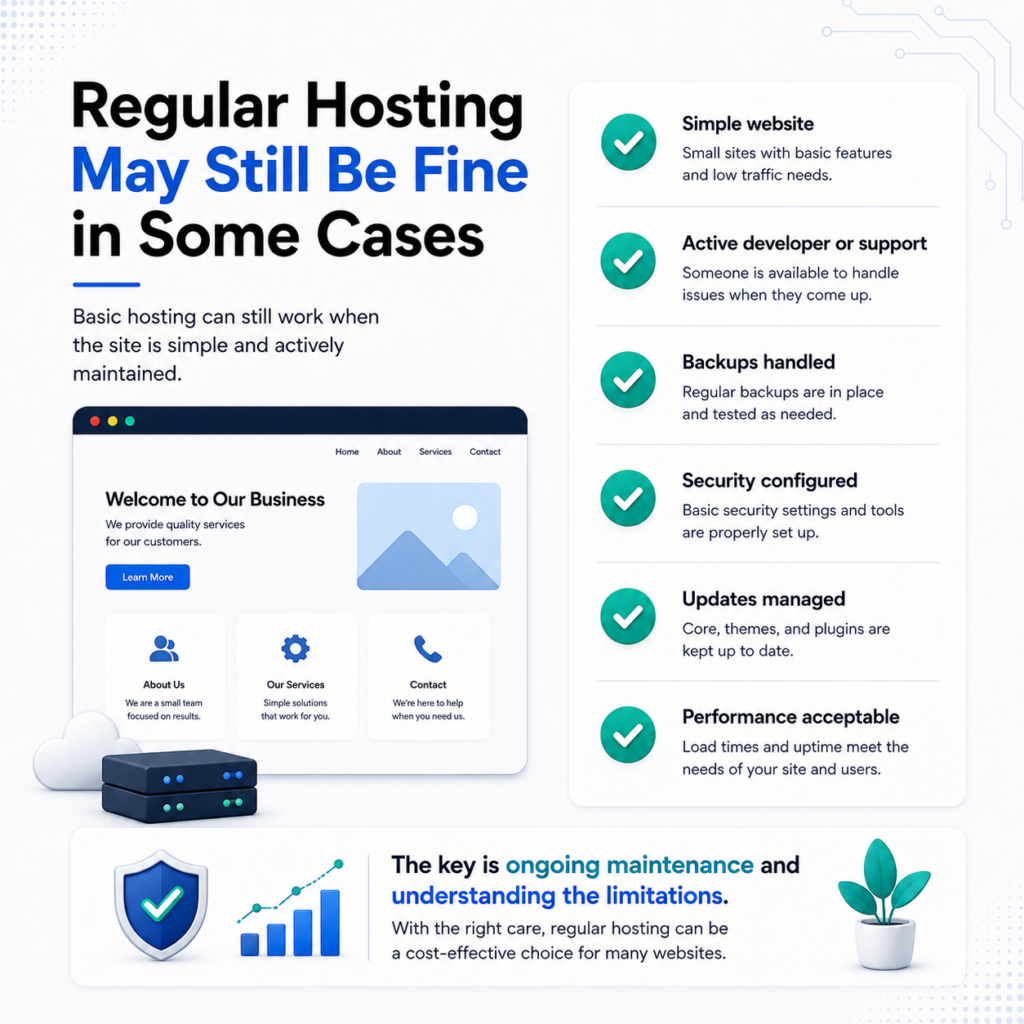
Managed WordPress hosting is not always required for every website.
Regular hosting may be fine if:
- The site is very simple
- A developer is actively maintaining it
- Backups are handled separately
- Security is properly configured
- Updates are managed responsibly
- Performance is acceptable
- The business owner understands the limitations
The key question is not whether regular hosting is “bad.”
The key question is whether your website is being properly maintained.
If nobody is monitoring updates, backups, security, and performance, even a simple site can become vulnerable over time.
When Small Businesses Should Consider Managed WordPress Hosting
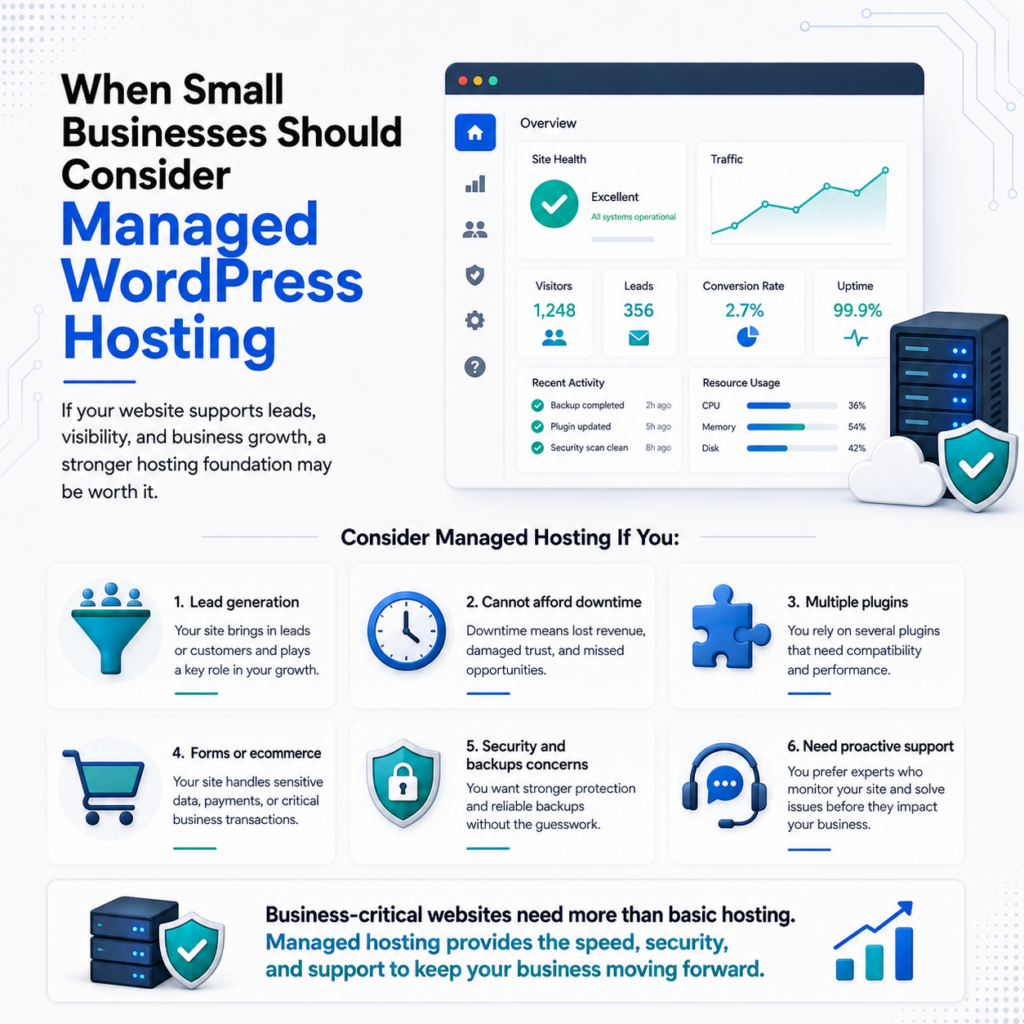
A small business should consider managed WordPress hosting if:
- The website generates leads
- The site supports local SEO
- The business cannot afford long downtime
- The site has several plugins
- The website has forms, ecommerce, memberships, or integrations
- The owner does not want to manage technical tasks
- Security and backups are a concern
- The site has had past malware or update problems
- The business wants more proactive support
If your website is important to your business, it deserves more than a “set it and forget it” hosting approach.
If your website supports leads, local visibility, or customer trust, a managed WordPress hosting option may provide a stronger foundation than basic hosting.
Hosting and Maintenance Work Best Together
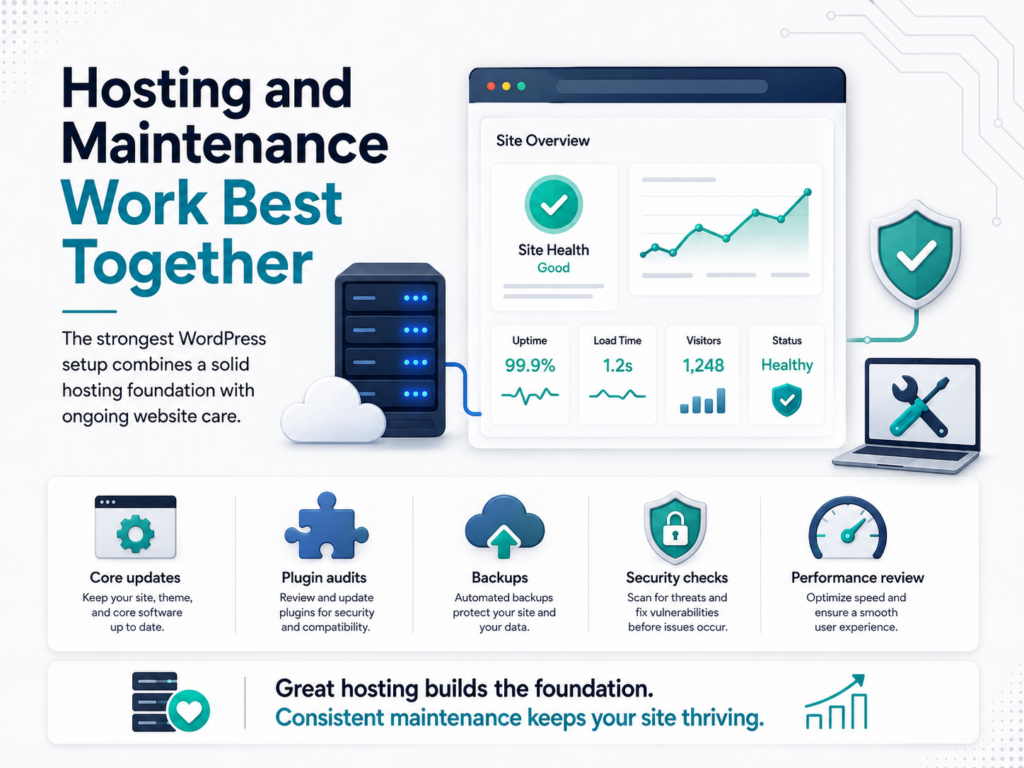
Managed WordPress hosting is helpful, but it should not replace website maintenance.
Hosting provides the foundation. Maintenance keeps the site healthy.
A strong WordPress care plan may include:
- WordPress core updates
- Plugin and theme updates
- Plugin auditing
- Backups
- Malware scanning
- Performance review
- Uptime monitoring
- Security checks
- Technical troubleshooting
- SEO and content support
When hosting and maintenance work together, your website is better protected and easier to manage.
How TK Internet Marketing Can Help
At TK Internet Marketing, we help small businesses make sense of WordPress hosting, maintenance, security, and performance.
Our WordPress services can help with:
- Managed WordPress hosting guidance
- WordPress maintenance
- Website security review
- Plugin auditing
- Updates
- Backups
- Malware scanning
- Performance review
- WordPress SEO support
- Technical troubleshooting
The goal is to help your website stay secure, reliable, and ready to support your business.
Is Your Hosting Really Supporting Your Website?
If you are not sure whether your current hosting is enough, now is a good time to review your setup.
A WordPress website review can help identify:
- Hosting limitations
- Missing backups
- Security gaps
- Outdated plugins
- Performance issues
- Maintenance concerns
- SEO-related technical problems
Your website should not just be online. It should be secure, maintained, fast, and ready to help your business grow.
Contact TK Internet Marketing to request a WordPress website review or learn more about managed WordPress hosting and maintenance options.
Frequently Asked Questions About Managed WordPress Hosting
What is managed WordPress hosting?
Managed WordPress hosting is hosting designed specifically for WordPress websites. It often includes WordPress-focused support for security, backups, updates, performance, and troubleshooting.
What is the difference between managed WordPress hosting and regular hosting?
Regular hosting provides general server space for different types of websites. Managed WordPress hosting is more focused on WordPress and may include added support for updates, backups, security, performance, and recovery
Does managed WordPress hosting replace website maintenance?
No. Managed hosting provides a stronger foundation, but WordPress websites still need ongoing maintenance, plugin review, updates, backups, and security monitoring.
Is regular hosting bad for WordPress?
Not necessarily. Regular hosting can work if the website is actively maintained, backed up, secured, and monitored. The risk increases when no one is managing the WordPress-specific tasks.
Does managed WordPress hosting improve security?
Managed WordPress hosting can help improve the security foundation by supporting backups, monitoring, SSL, malware scanning, and WordPress-focused configuration. However, security also depends on updates, passwords, plugins, user access, and ongoing maintenance.
Are backups included with managed WordPress hosting?
Many managed WordPress hosting plans include backups, but the details vary by provider. Business owners should confirm backup frequency, retention, storage location, and restore options.
Is managed WordPress hosting worth it for small businesses?
Managed WordPress hosting can be worth it for small businesses that rely on their website for leads, visibility, credibility, or online sales. It can reduce technical burden and provide more proactive support.
